This mind looks at a thing and sees what it could turn into. A new idea, a rough plan or an odd fact starts branching into options almost at once. Ideas keep coming on their own, in the middle of other things, and the Catalyst gives most of them away. The unusual and the unexplained draw this mind most.
Loose ideas don't satisfy a Catalyst for long. Each one has to grow into a clear system, with parts that fit together and a reason behind every step. Rules whose only basis is "that's how it's done" get little respect from them.
From the outside they look quick and lively, and at times absent-minded. Inside, the ideas keep branching. Finishing, checking and tidying up feel like a different job altogether. Routine and rules handed down from above wear them out fast.
What this mind lacks most is warmth and ease in everyday life. These usually come from other people, so the Catalyst is drawn to someone gentle who lifts the mood without making demands.
Attention tends to turn outward, to the objects, people and setting right there in plain view.
The Catalyst gathers information from every channel at hand, official or not, and doesn't always double-check it. They prefer to deal with things and their surroundings directly. In anything they join, they tend to question how it's done and start rebuilding it.
2 of 4
Intuition and sensing
What else a situation could turn into, from untried options to untapped abilities, is usually what gets noticed first.
Distant prospects are easy for the Catalyst to see. Past achievements count for little. They're attracted to the unusual and the little-studied. Solutions tend to appear at once as a hunch, with the reasoning filled in afterward.
3 of 4
Logical and ethical
When the work calls for it, a complex problem usually gets broken into parts to test options or back up a decision.
The Catalyst breaks events down into causes, effects and the steps in between, and sorts people into types the same way. They meet dogma and blind faith in authority with a skeptical smile. They try to stay objective and to stick to fair principles.
4 of 4
Irrational and rational
Thoughts tend to flow into one another, jump around and loop back, and interest catches fire here and there.
The Catalyst's associations leap between far-apart fields, and creative work goes on as one continuous process with few stops. In an emergency the Catalyst pulls together and finds many ways out.
The most accurate free test for the 16 Jungian types
Ten minutes, and you'll know your type. The test looks at how you phrase your thoughts. The type in your speech doesn't change, so you only need to take it once. Your result shows the accuracy for each of the four scales.
Every mind works with eight functions, and each covers its own area of attention. The first four cover the areas a person cares about most. The last four are weaker and cost effort. A function's position in this order decides whether it works by itself, needs a nudge from others or is a sore spot.
Valued functions
A person treats all four of these functions as their own, but in two different ways. In two of them, the person is strong and self-reliant. In the other two they're weaker, so they gladly accept help and notice people who are strong in them.
This function mostly deals with what a situation could turn into. That includes the options hidden in it and the flash of suddenly seeing its point. In the leading position it runs on its own, all day, without any effort.
The moment a possibility appears, the Catalyst starts telling others about it and looking for allies. Ideas keep coming, though only a few turn out to be workable. They share them freely and often don't mind who finishes one, as long as the idea lives on.
People get the same treatment. The Catalyst quickly spots what someone could become and likes to encourage it. They're drawn most to anything new or unexplained, like a fresh method or an odd theory. When a trend sweeps everyone else up, they often step aside and look at it with a cool head.
The price is divided attention. When their thoughts are busy with an idea, someone talking to them may get no response. Plans built on a grand scale can look naive. A limit or a ban feels like a shrinking of the field, and they push against it. Slow, point-by-point explanations make them feel treated as slow.
Structure is the field here. That means the parts of something, the boundaries between them and how one step of an argument leads to the next. In the creative position it's a tool the Catalyst picks up on purpose to serve their ideas.
Every idea gets a framework, such as a classification, a definition or a diagram. If an idea won't fit, either the framework changes or the idea gets reframed until it does. The goal is a single explanation for things that seemed unrelated.
Arguing is how an idea gets tested. A counterargument either breaks it or shows where it needs support, and both results are useful. A strong opponent is a pleasure, and a hard question that no ready-made concept can answer is even better.
There are costs. Other people's logical slips grate on the Catalyst, while their own seem to leave the main point untouched. A listener who has no organized knowledge and mixes up terms tires them. When something bothers them, they can put the complaint into precise, persuasive words.
This function covers mood, from how high someone's spirits run to the atmosphere in a room. For the Catalyst it sits in the mobilizing position, which means it switches on when someone else sets the tone.
In a warm, welcoming setting they loosen up and turn quick and funny. Hearing that they're welcome and interesting makes them want to do something nice for that person. Gentle teasing, light jokes and tactful questions about their life go down well.
Alone, they have little emotional energy to draw on. Routine pulls the mood down, and a lively conversation or some kind of jolt brings it back. A person who takes the emotional lead and lifts the room is a relief, since the Catalyst enjoys live, emotional company. Without a charge from outside, they can stay flat for a long time.
Setting the mood for others is harder, so the Catalyst more often sets up the conditions for someone else to do it. A joke may come at the wrong moment. A clumsy attempt to cheer people up can look immature.
The body and its surroundings are this function's field, and that includes comfort, food, health and how a place feels. In the suggestive position it does best when somebody else provides it, and the Catalyst takes it in gladly.
Choosing, comparing and shopping for the home feel like chores they'd happily hand over. The body's signals count for little while a thought is running, and they register only once they start to get in the way. They tidy up only when the mess becomes a problem.
Left alone, the Catalyst puts up with a lot and sticks to familiar tastes. They approach new foods and new things with suspicion. They can get by on little, and an interesting thought makes up for a lack of comfort.
Things change around someone whose taste they trust. They borrow that person's choices and feel the pleasure as something shared. They enjoy the comfort that follows.
Warmth, food and coziness offered freely let them really relax. Nagging about housekeeping or spending irritates them. Care given out of duty hurts, and they feel the difference at once.
Unvalued functions
Here confidence and interest part ways. Two of these functions come naturally, without a second thought and without any need for praise. With the other two, the person goes by the book and doesn't aim for more. But under pressure from others, one of those two is where it really hurts.
Here the field is how a job gets done, which takes in methods, skill, results and what actually works. In the demonstrative position it's easy to put on display, though there's less underneath. It comes out mostly as advice.
The Catalyst likes to explain how a job should be done and usually knows the principles. Hands-on experience often lags behind, so they may start a task from the wrong end. In a tricky everyday situation they can be surprisingly resourceful.
Routine, detail and checking are the weak spot, and small required steps feel confining. They bend or sidestep strict discipline. When they join someone else's project, they tend to rebuild it their own way.
Two pulls sit side by side. One is concern for their reputation as a conscientious worker, which favors proven methods. The other is a taste for shortcuts and for inventing their own way.
People tend to trust a confident adviser with the job itself, even beyond what that adviser has done before. The Catalyst welcomes respect for their competence and resents corrections delivered in a teacher's tone.
Time as it's lived belongs to this function, from how events unfold and how long waiting feels to where things are heading. In the ignoring position this is a boundary. The Catalyst draws on it when needed, but it doesn't set their pace.
Time spent on their work feels like it belongs to them, and they bristle when others decide how it's spent. Tight deadlines and rushing don't sit well with them. They prefer long-range plans that time and circumstances can adjust. They also trust that things will get better and that there's plenty of time.
Waiting seems to drag on forever, while interesting stretches fly by. Even after working out the route exactly and allowing extra time, they often arrive late. Looking back, they regret what they missed and still feel ready to start over at any age.
Questions like "when?" and "where to?" can meet silence. They describe a plan as a dream, and listeners hear a promise.
Others may see the Catalyst as hesitant and often late. All the while, a steady calculation runs in their head. Within their own field, they can tell where things are heading. They do weigh the consequences of their ideas in advance, but silently, and a lecture on foresight feels pointless to them.
Force and will make up its territory. That includes pressure, resistance, sticking to an obligation and staking out ground. In the role position the function is a part they play when pushed, and it doesn't come naturally.
A commanding tone is enough to make them dig in, and the objection comes before any thinking. The pushback is short and strong, but a long standoff wears them out, so effort comes in bursts.
They dislike forcing other people and have little patience for those who do. Fixed duties and strict routines feel imposed from outside, and a reminder about a promise can sound like an accusation. They defend their right to live as they choose, and they avoid long, direct confrontations. Force doesn't work as a language with them: it gets force back.
Dull but necessary work is hard for them to focus on, and they're well aware of their own lack of discipline. Talk about their willpower makes them uncomfortable, and outward firmness can be a pose covering doubt. They prefer to influence people through advice, and rank means little to them.
This function is about how people stand toward one another. That takes in closeness and distance, who counts as "one of us" and what's proper. The vulnerable position makes it the Catalyst's sore spot.
Reading how others feel about them takes effort, and so does judging how close is too close. They say what they think without noticing that it stings, and usually feel only awkwardness afterward.
With strangers they start out formal and watchful and hold back until they know enough. Once someone is close, they can become relaxed, even overly familiar, and the distance keeps swinging between warm and cool.
A reproach in the name of manners or morals sounds like a rulebook somebody else invented. Their reply comes out sharp, or they brush the rules aside.
Their own attitude to social rules swings. At times they hold others to strict standards, and at times they call the rules outdated. Inside, they feel a pull to loosen the rules and a sense of shame at the same time.
They trust people who show care and confirm where the relationship stands. Decency matters a great deal to them. They accept the people close to them completely, and any kind of apology is enough.
See yourself in this? That's only the beginning
The Premium Profile pulls all of this into one picture. It has 11 chapters and about 60 pages on how the Catalyst thinks, works, loves and builds a life.
It explains where the flood of ideas comes from and why some of them grab hold while others fade. Once that's clear, it's easier to choose which ones deserve your energy.
The part of the mind that reads what a situation could become (Intuition of Possibilities) turns blocked paths into options.
The part that builds structure (Structural Logic) gives the idea a frame and finds the pattern in it.
As a mentor, the Catalyst uses that same structural sense to pass on ways of reasoning first and answers second.
The sense of time and direction (Temporal Intuition) gives a long horizon and the patience to wait out a bad stretch.
The practical side (Practical Logic) brings resourcefulness and a knack for getting some benefit out of an awkward spot.
The openness to possibilities takes up someone else's thought as easily as it gives away its own.
Weaknesses
The part that reads closeness and distance (Relational Ethics) is the weak spot, so new acquaintances are often misjudged.
The part that senses comfort (Experiential Sensing) gives little warning, so fatigue and mess build up until someone steps in.
The part that deals with will and duty (Volitional Sensing) is uneasy with obligation. A promise made with "I can" in mind is heard as "I will".
The part that picks up mood (Ethics of Emotions) needs a charge from others. In routine the mood sinks until something brings it back.
The same will-and-duty part answers force with a quick, sharp reply, and some people don't come back.
The mood-reading part can send a joke or a cheer-up attempt at the wrong moment, and it comes across as immature.
Careers and money for the Catalyst
At work the Catalyst is strongest where someone has to see a direction and lead people toward it. They fit the stage where a rough idea turns into a system. That might be a framework, a classification or a plan others can follow. Strategy and big changes suit them, in a company or in a business of their own.
Their pace is uneven. Interest holds while a way forward is visible. Once a project is nearly done and a stronger idea appears, the Catalyst moves on and leaves the final stretch to others. A rigid schedule and constant rushing make the work worse. They do their best work alone, or with plenty of freedom over how to do it.
In a team they're democratic and have no use for rank for its own sake. They push back against rigid rules and tight control. Following a boss is hard when an order clashes with their judgment. An order that doesn't convince them often goes undone.
In charge, the Catalyst leads by persuasion, and decisions get made through discussion. Their original way of thinking earns respect. Detailed planning and checking go to the team, since organizing isn't their strong side. If an opponent's arguments are thin, they hold their ground.
What drives them is originality. An unusual one-off project, a chance to grow, or hearing "only you can solve this" all do the trick. Work is also a way to learn something new, and sometimes the learning matters more than the result. Monotony and heavy regulation drain them fast.
Profit matters less to the Catalyst than interesting work, and saving rarely becomes a habit. They lend and borrow easily, after weighing whether it can be paid back. In their own business they start many things at once, and bookkeeping is the weak spot.
Love and closeness for the Catalyst
With strangers the Catalyst starts out formal and watchful. Once they're interested, they often make the first move, and courtship tends to mean talk about facts, ideas and things worth knowing. A shared way of seeing the world counts for more than looks.
At home the Catalyst brings ideas, enthusiasm and respect for their partner's mind, and they give plenty of freedom. Household chores tend to slide. Warmth and comfort matter to them, though they rarely ask for them outright.
Moral scolding wounds them, and so does a lecture from someone close or being put down in public. Jealousy can be sharp when a partner gives them cause. What the Catalyst fears most is being cut off before they've finished speaking, and losing recognition.
Talking about their own feelings directly feels too intimate and a little foreign. Liking shows up as a favor, a useful tip or an invitation. Silence can look like indifference to a partner who is waiting to hear the words.
A quarrel with the Catalyst tends to be loud and long, with accusations flying both ways. They can't stop it on their own. What ends it is a partner who listens, calms them and steers the talk toward something pleasant. Later they are often embarrassed and want to explain themselves.
In a long relationship the Catalyst settles down. A gentle, tactful partner looks after warmth and home and shares out duties without pressure. That gives them a calm base, and they feel more like working and earning. Closeness may still swing between warm and cool.
Who the Catalyst is confused with
Executor (ENTJ)
The Executor (ENTJ) is mistaken for the Catalyst most often. Both are energetic, full of plans and fond of a good argument.
What drives them is different. The Catalyst runs on the idea itself, on thinking it up, passing it around and moving on to the next one. The Executor wants results and asks what something will bring and how to get there faster.
The Executor also believes mostly what they've checked and seen, while the Catalyst is content once something is proven in theory. The Executor takes the lead and tightens the schedule. The Catalyst keeps things loose and pushes for an equal say.
Harbinger (ENFP)
The Harbinger (ENFP) is confused with the Catalyst less often. The two share the same pull toward new possibilities. The Catalyst turns that pull toward ideas and systems, the Harbinger toward people and their prospects.
In an argument the Catalyst hunts for the weak link in the reasoning. The Harbinger answers with feelings and steers the talk toward who's been hurt.
If you're torn between two types, there's one way to settle it: a type assessment from your speech, recorded or live.
The Catalyst gets along differently with each of the sixteen types. Some pairs feel easy from the first conversation, and others keep running into the same wall. The cards below show how each relationship usually goes. The blog has detailed articles on every pair, and these cards are the short version.
This pair tends to feel like coming home. The Harmonist looks after physical comfort, the household and the mood, and softens clashes with other people. The Catalyst's ideas finally meet a listener who keeps them realistic without squashing them. Tension eases, and the Catalyst's mind turns to work and plans.
The pair is warm and lively. The Beacon brings energy and taste, and the Catalyst brings a quick mind and a wild imagination. The Beacon tends to ask openly for feelings and effort and expects rules to hold, while the Catalyst bends them for fun. After a pleasant evening the Catalyst sometimes feels they owe something.
Both care about possibilities and structure. The Catalyst puts possibilities first and fits structure to them, and the Grandmaster does the opposite. The Catalyst widens the field, and the Grandmaster trims it and keeps it tidy. Arguments about almost anything tend to turn into accusations of bad logic, and both end up swearing off arguing. The Catalyst misses warmth here.
Two Catalysts usually understand each other quickly and think along similar lines. Plans, shared interests and endless conversation come easily. The household tends to get neglected, because each expects the other to look after it. The bond lasts as long as it stays interesting to both.
The Craftsman comes across as a practical conversation partner, and the Catalyst's ideas get a response. Care tends to arrive in small, measured doses, in the tone of a business mentor who corrects the Catalyst's work. When a talk turns emotional, the Craftsman may go quiet and step away. The Catalyst is left with what wasn't said.
From a distance this pair is easy and friendly. The Flamekeeper listens to the ideas, admires the range of knowledge and asks for nothing in return. Up close, the Flamekeeper's delays and "a little longer" dampen the Catalyst's working pace. Sudden shifts from charming to firm can also unsettle the Catalyst.
Both widen the field of options, and each wants to decide what's possible. The Catalyst checks possibilities against the facts. The Harbinger offers a confident version where wishes and facts blur together. Arguments tend to go in circles without real reasons being traded. The Catalyst can neither agree nor walk away, and afterward often regrets being drawn in.
The relationship feels like a contract. The Warlord gives orders and expects them carried out. The Catalyst discusses and questions, so urgent matters can stall. One argues for equal rights, the other for rank and order. The Warlord checks ideas for practicality and profit, and tends to wave off a project that comes without the numbers.
The first meetings are easy and fun, with ideas flying, and together they feel like a force. The Catalyst hands out ideas and believes in success. The Executor wants guarantees and takes the lead, so who runs the project is often in question. The Executor tends to meet fair complaints with puzzlement, which stings more than a quarrel would.
Conversation flows easily, from politics to history to forecasts. The Catalyst respects the Seer's gift for seeing where events are heading. When the Catalyst proposes a joint project, the Seer asks for time to think and answers vaguely. The moment seems to pass, and gloomy forecasts replace the enthusiasm.
The Herald listens, remembers and retells the Catalyst's ideas, and gives an emotional lift the Catalyst can rarely find alone. Flattered, the Catalyst slips into the role of teacher. Later the Herald starts asking about direction and dates, gets answers that keep changing, cools off and takes the lead. The Catalyst feels recognition slipping away.
The Overseer sets a high bar for skill, quality and neatness, and the Catalyst absorbs it eagerly. The Catalyst's ideas, in turn, spark the Overseer into bursts of new projects. The constant "refine it a bit more" wears the Catalyst down. When they ask about the payoff, the Overseer advises more polishing and promises nothing.
The Catalyst is drawn to a reserved, tightly wound person and wants to bring out their best. The Catalyst words tasks loosely, and the Sentinel returns a detailed report that the Catalyst checks and hands back. Arguments and pressure can feed the Sentinel's fear that something will go wrong. To the Catalyst, the Sentinel's care seems sparse.
The Sage's warmth and attention to the home are inviting. With them comes a steady stream of moral corrections about speech and manners. The Catalyst is lost for words and embarrassed, since taking an argument apart is no use against an appeal to norms. The Sage tends to nurse the hurt in silence.
From a distance each sees the other as a good match, but up close the pull is missing. The Catalyst likes the Duke's drive and readiness to fight for what they believe in. The Duke asks for results first and puts the Catalyst's plans to the test. The Catalyst feels nobody is listening to the idea itself.
A quiet, modest, slightly unsure Custodian draws the Catalyst, who wants to build them up. Encouragement about their potential can feel to the Custodian like a raised bar. Talk of duty and rules sounds to the Catalyst like someone else's code. Replies get louder, and the Custodian withdraws.
Famous Catalysts
PrometheusTitan of Greek myth who stole fire from the gods and gave it to humankind.
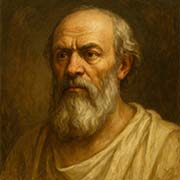
SocratesAthenian philosopher of the fifth century BC, known through the dialogues written by his students.
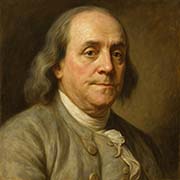
Benjamin FranklinAmerican statesman, scientist, inventor and writer, and one of the founders of the United States.
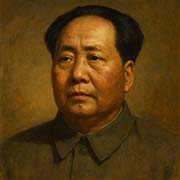
Mao Zedongleader of the Chinese Communist Party and founder of the People's Republic of China in 1949.
The myth about the Catalyst
"The Catalyst argues for the sake of arguing and drops every project halfway."That's the usual line.
The arguing has a purpose: it shows whether an idea holds. A Catalyst usually wants an opponent who argues back with reasons, and a quarrel with no ideas in it bores them.
The unfinished projects follow a pattern too. Interest fades when no way forward is visible, or when the project is nearly done and a stronger idea has appeared. Calling that fickleness misses what's happening: the mind has finished its part of the job.
There's a real cost, though. What's left is routine, detail and checking, and without a partner or a structure the finish suffers. Someone who carries a project through to the end makes a large difference.
Questions about the Catalyst
Yes, it's the same type under different names. MBTI writes it as ENTP, the Jungian tradition as Ne-Ti, and the socionics tradition names it Don Quixote, code ILE. All of these systems grew out of Jung's research. Here the Catalyst is defined by its eight functions, and the letters are just a label.
No. The set of functions and their order stay the same for life. What changes is how a person uses them and how well they cover the weak spots. With age, many Catalysts learn to watch the small things and how to wait. That's growth in how they handle the type. The type itself stays the same.
Two parts of the mind work together. One keeps producing ideas and wants to put them in front of people. The other finds a counterargument to almost any claim, unprompted, so an idea gets a frame only once it survives one. That is why arguing doubles as a stress test, and why the Catalyst enjoys an opponent who argues back.
Closeness and distance are the weakest area of this mind. The Catalyst often misjudges how close to get to someone and makes mistakes with new acquaintances. Strangers get a formal, watchful start. What helps is someone who says plainly where the relationship stands.
Attention goes to the idea first, and the body gets what's left over. Comfort is also an area where the Catalyst takes cues from other people and rarely chooses on their own. Someone with a feel for coziness who looks after the home gladly, without keeping score, can change a lot for them.
More on the Catalyst
A single page can hold only so much of a type. For anyone who wants certainty about their type, or more detail on the Catalyst, there are two ways to go on.
The doubt won't go away on its own. A type assessment from your speech settles it
You can reread the page, you can take five more tests, and the doubt will still be there. Start with our free ten-minute test. If you still have doubts after that, a type assessment from your speech settles the question. For good.
There are two books to continue with. The Premium Profile ($10) has 11 chapters and about 60 pages on the Catalyst. They run from what drives them to work, closeness and growth.
Master Relationships ($30) is two books. "A Relationship Guide to the 16 CoreTypes" covers the Catalyst's pairs with every type. "A Field Guide to the 16 Types" teaches you to recognize a type from speech.