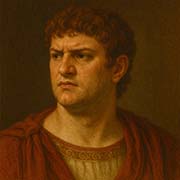
In any situation two things register with a Duke at once. One is who has the strength here, the other is who stands with whom. Judging how much force the situation calls for takes no effort. Taking the lead needs little thought, and so does getting people moving. Nobody has to hand over the role.
People get sorted fast into close and distant, friends and rivals, though the line between them can shift. That's why a friend who crosses to another camp feels like a betrayal. Loyalty, fairness and a good name in the group matter a great deal, and this type works hard to keep them.
Staying first takes constant effort, and rivals are rarely far from mind. Every success gets measured against other people's. The recognition that counts is the kind people give freely. Warmth and drive come easily and win people over. Being ignored hurts.
The long view comes less naturally. That means sensing where things are heading, how long they'll take and when the moment is right. Without it, time tends to run short, so that sense often gets borrowed from someone else. A Duke is drawn to the person who offers it calmly, without raising alarm.
Attention tends to turn outward, to the objects, people and setting right there in plain view.
Problems get tackled on the spot, and the Duke wants to see results soon. When nothing comes of an effort, the wish to carry on fades. Close, concrete goals of practical use suit this type best. If what's out there and an inner hunch disagree, the Duke goes with what's out there.
2 of 4
Sensing and intuition
Size, strength, boundaries and what can be controlled tend to be noticed first, since the tangible is what draws the eye.
Proof has to be solid, so a Duke backs a point with facts that can be shown. People are sized up by how they look and how they act. A good result is visible and real, something that can be held in the hand.
3 of 4
Ethical and logical
Knowing who's close and who's distant usually helps with working alongside people and looking after those who are dear.
Likes and dislikes get said out loud, and feelings about a person can change. Falling out and making up come equally easily. In a quarrel the moral side comes first, and being lectured on ethics feels like mockery. To a Duke, relationships don't run on simple formulas.
4 of 4
Irrational and rational
One impression or task gives way to the next without sharp edges, and an unexpected turn is usually taken in stride.
Interests get picked up as the mood takes them, and boredom is rare because there's usually something else at hand. A Duke acts in the moment and reads an unexpected situation fast. Almost any chore can be turned into a game or a show. A task that stays dull simply stalls.
### The most accurate free test for the 16 Jungian types
Ten minutes, and you'll know your type. The test looks at how you phrase your thoughts. The type in your speech doesn't change, so you only need to take it once. Your result shows the accuracy for each of the four scales.
A personality type uses eight cognitive functions. Each is a way of taking in the world and deciding what to do about it. Where a function sits decides how strong it is, what it costs to use and how readily it shows. These are the Duke's eight, in the Duke's own order.
Valued functions
A person treats all four of these functions as their own, but in two different ways. In two of them, the person is strong and self-reliant. In the other two they're weaker, so they gladly accept help and notice people who are strong in them.
This function is mostly about force. Strength and pressure belong here, along with who holds the ground and a desire stated plainly and aimed at a target. It's home base, and switching it on takes no effort.
A Duke judges quickly who can stand pressure and who will push back. That decides whom to challenge and whom to side with. The aims are big: wider influence, the most possible now and later, being among the best and leaving a good memory.
The Duke goes after them openly. Even passive people get drawn in, because a contest is the Duke's favorite way to begin. The first push is the strongest. When somebody doesn't give way at once, interest often cools, and a long siege isn't the Duke's style.
In a tight spot the Duke pulls together and gets sharper. In shared work everyone has equal rights, though the lead stays with the Duke. Holding first place is hard work, so every result gets compared with other people's. It stings when a colleague is praised in the very field where the Duke hoped to come first.
Closeness and distance between people sit at the heart of this function, together with who's one of us and who isn't. It also covers the personal verdict on someone's character. The Duke uses it deliberately, as a working tool for leading.
A Duke offers warm attention early, treats business like friendship and sets out to win over anyone who matters. In any relationship the Duke wants to stay the leading one. People who don't matter barely register. Full closeness comes slowly, in stages, because it brings obligations.
Tone follows the situation, from coaxing to reproach and back. Yesterday's rival can become today's ally when the work calls for it. The Duke negotiates between opposing camps, patches up broken ties and works at a reputation for fairness and reliability.
Wanting everyone to be happy has a cost. The Duke ends up running between sides. Friends and foes swap places so fast that it gets hard to tell who stands where. Asked to choose between two friends who've fallen out, the Duke tries to keep both.
Results are the main ground here. That takes in what a piece of work delivers, how well it was done and whether it paid off. The function stays dormant until someone hands over a ready method.
Given one, the Duke lights up. A clear way to do the job and a chance to do it flawlessly bring real enthusiasm. New skills are picked up fast, and they stick. A memorable technique from a trusted source gets taken on faith, and so do corrections to the Duke's own methods.
Routine checking of details is a bore. A Duke gladly hands it to a partner who will go over everything and offer reassurance. Where the Duke's own skill and reputation are at stake, every stage gets checked personally. Underneath lies a fear of being pushed out of the work as unfit.
Advice with no technical detail irritates, and so do contradictory instructions. With a clear method and someone reliable for the details, even a hard job moves.
This function has to do with how events unfold. It covers what stage things have reached, where they're heading and how long it'll all take. In this position it's weak, so it gladly accepts what others offer.
Left to itself, it brings a cheerful belief that the best is still ahead. It also brings a knack for being in the right place at the right time. A temporary setback isn't mourned. Thinking through consequences takes effort. The Duke tends to picture the future the way they hope it'll be.
Caught up in a project, the Duke may not notice it's going nowhere. A precise forecast from someone trusted is welcome, especially one that says how long things will take. Asking for one feels awkward, so the Duke waits for it to be offered. Waiting is hard anyway, and time tends to feel short.
A gloomy forecast lands too, and that's the cost. A confident voice predicting disaster, or promising quick success, can knock the Duke off balance. The Duke may then agree to things they'd normally refuse. Someone who describes what's ahead calmly, without frightening, and leaves room to move is highly valued.
Unvalued functions
Here confidence and interest part ways. Two of these functions come naturally, without a second thought and without any need for praise. With the other two, the person goes by the book and doesn't aim for more. But under pressure from others, one of those two is where it really hurts.
Its subject is how feelings show between people, such as the mood of a group and how heated things get. It runs in the background and does its work unasked.
When a group is low, its mood tends to lift once a Duke arrives, without anyone planning it. At a celebration the Duke is the first to raise spirits, though not always as the host. When a problem lands, the same energy turns businesslike and forceful.
On the surface the emotion is loud and open. Underneath, it serves the relationship and adapts to the occasion. Strong feelings in other people don't throw the Duke, because a practical way to help comes to mind first.
In youth the emotion can be exaggerated, with delighted or frightened exclamations. With age it grows more restrained. The Duke insists the feeling is sincere, and doubt about that can bring a show of anger meant to prove it.
Keeping a group's spirits up for long tires a Duke. With people met only in passing, the whole effort feels shallow. Reserved, loyal people whose words carry weight are a pleasure to be around.
The body's side of life belongs to this function, including comfort, taste and whether a place feels right to be in. A Duke attends to it when needed and doesn't build life around it.
Taste is there all the same. A Duke knows what makes surroundings pleasant and doesn't want to look worse off than other people. An irritating place gets swapped quickly for a better one, and a cramped or cluttered space wears the Duke out fast.
Strong, striking things appeal more than subtle shades, so choices can come out heavy-handed. In an unpleasant place a Duke first goes along, then gets bored and looks for a graceful way out.
Stamina is high, and health rarely gets a thought. When a goal calls, comfort gives way. Rest means plenty of new impressions, and travel fits the bill. Fussing over health grates, and so does a cloying, sugary atmosphere.
A tie that no longer brings joy fades without much fuss, and new ones start just as easily. A final, open break rarely happens, so the circle of acquaintances keeps growing.
Possibilities are the subject here, such as what could come of a situation and what a person might grow into. The position is shaky, so its readings get checked against what other people say.
The Duke would like to look capable and promising and, when keen to be noticed, tries on different roles. People with weight and experience get leaned on. Other people's plans get a quick scan for what stage they've reached and what each person can offer.
Before a big step the Duke asks many people what they think, with real interest, and then decides alone. Patience for a long answer sometimes runs out before the end.
Estimates of people and chances run optimistic, and little gets checked. At the first real obstacle the enthusiasm drops and a hunt for a way out begins. Mistakes here are expensive, which keeps the Duke working at this sense without fully trusting it.
A promising newcomer gets sized up within the first conversation. Uncertainty is hard to bear, and the Duke sometimes forces the outcome just to see who's who. Someone who lays out the options and warns gently about what could go wrong is welcome.
Among other things, this function covers the frame of a thought. It deals with how an argument is built, what parts a subject has and which rules apply. It's the sore spot, and pressure here does real harm.
Sorting knowledge into categories and setting it out in order is dull work and doesn't come easily. A Duke skips instructions and rule books and would rather settle things with people or go on instinct. A little knowledge of many subjects usually does, as long as the subject feels familiar.
Criticism of the substance can be worked with. Being called illogical is different. Afterwards the Duke's actions lose their grip and turn fussy. Being called unintelligent or incompetent is harder still. Jargon and a lecturing tone shut the Duke's questions down. Anything thick with legal or technical detail makes the Duke wary, for fear of seeming out of their depth.
What helps is a ready system in plain words, explained step by step with examples. Then the Duke reaches the conclusion alone.
### See yourself in this? That's only the beginning
Loyalty and recognition, being first and what it costs: the Premium Profile traces where all this comes from in a Duke. It also covers how the Duke works, loves and grows. It has 11 chapters and about 60 pages. Knowing the reasons makes it easier to run your affairs and look after the people close to you.
The Duke's feel for force and pressure (Volitional Sensing) shows who can take the strain and gets people moving.
The same feel for force turns work into a contest, and even passive people join in.
A feel for closeness and distance between people (Relational Ethics) lets the Duke win trust and give business the warmth of friendship.
The same feel for ties helps the Duke negotiate between opposed sides and repair relationships that have broken.
The Duke catches a group's mood (Ethics of Emotions) and is often the first to raise it.
A feel for comfort and the body's needs (Experiential Sensing) gives endurance and a knack for vivid, restful breaks.
Weaknesses
A feel for how work gets done (Practical Logic) wants clear methods, so remarks on results sting and the Duke gets defensive.
The Duke's sense of how long things take (Temporal Intuition) is weak, so many projects begin at once and time runs short.
The Duke's read on people's potential (Intuition of Possibilities) runs hopeful, and a costly miss can follow.
The same sense makes uncertainty hard to live with, and the Duke may hurry an outcome just to know where things are.
The part of thinking that sorts and orders (Structural Logic) wears the Duke out, so classifying and reading rules get avoided.
With that sense weak, an organization's rules tend to follow the Duke's style, and a strong goal makes bad results look small.
Duke careers and money
The Duke is strongest where people have to be set in motion. The best roles involve setting the pace, starting a contest, negotiating between sides and bringing in resources and connections. Big scope appeals, and the fine print of carrying it out is happily left to others.
Where results show quickly, the Duke works fast. Without a quick return, or with a long stretch of grinding work, interest cools and the Duke looks for another route. Slow, painstaking work doesn't suit. Routine checks of details go to a reliable partner, unless the work carries the Duke's own name.
In a team the Duke organizes people and keeps promises to the group. Others are expected to put in the same effort, and passivity or backing away from a plan is hard to accept. Under a boss, the Duke works best when someone else sets the strategy and the method. Criticism goes down easier when it's private and gentle.
As a leader the Duke is flexible and diplomatic, holds opposing sides in balance and knows each person's strengths and weaknesses. Doubters tend to be pushed away. A small team under a Duke gets emotional bursts and an uneven rhythm. In a large organization the effect is weaker and sometimes helps, for example before big changes, when energy is needed.
A Duke is driven by being the best and having it acknowledged. That means recognized merit, a name for fairness and care, and a high standing in the group. Knowing the work is needed matters a great deal. Prohibitions, nitpicking about quality and being sent back to the basics drain motivation fast.
The Duke spends on quality and likes to look well off. A good mood brings generosity, even extravagance, and a bad one brings careful counting. Big risks get weighed before deciding. Still, the chances of new people and plans often get misjudged, and that's where a sober adviser helps.
The Duke in love and relationships
A Duke moves fast, on charm and push, and makes the first move. Early attention is warm and generous. Closeness feels like a gift to the partner, and the wish to make them happy is sincere. If the response is slow, interest often cools. With the right partner an obstacle does the opposite and sharpens it.
A Duke looks for someone strong and successful, someone next to whom it's easy to feel strong too. In return the Duke loves generously, offering protection, moral backing and help with getting ahead and meeting people. Care shows in deeds and attention.
Indifference wounds most. Close behind come a refusal of closeness, public humiliation and the feeling of being seen as weak. Doubt about whether the Duke's feelings are sincere hurts too. Jealousy is rarely shown, because showing it feels humiliating, but a rival may be quietly kept out of the shared circle.
Words come harder than deeds. In everyday talk the Duke is open, while full closeness still comes only in steps. Talking a relationship through with someone dear may get put off, since the Duke doesn't want to lean on them emotionally.
A quarrel opens with a strong burst of reproach, followed by quick reconciliation and a promise to spare the partner's feelings. Suspicion is answered with a flood of explanation. Being fussed over and claimed too soon feels like an attempt at control, and the Duke pulls away. An attack on moral character, though, lingers for a long time.
In a mature bond the Duke is drawn to someone who calmly sees where events are heading. That person also sets the right moment and pace. A gentle warning about trouble ahead is welcome. Next to them, the Duke's bustle settles.
Who the Duke is confused with
Warlord (ESTP)
The Warlord (ESTP) is the type the Duke is confused with most often. Both take charge, press hard and bristle at resistance, so either can pass for a tough leader. Both also lean on allies and dislike standing alone.
The difference is in what each holds on to. A Duke wants recognition and trust that people give willingly, and counts on ties and loyalty. A Warlord wants real power, keeps hold of what's been taken and demands discipline. A Duke invites people into a contest and a shared effort and resents being pushed down.
Beacon (ESFJ)
The Beacon (ESFJ) is confused with the Duke less often. Both are bright, expressive and keen to be noticed, and both react sharply to being underrated.
The Beacon looks after the mood in the room and the feelings of everyone in it. A Duke's attention, meanwhile, goes to the outcome and to the group's standing.
If you're torn between two types, there's one way to settle it: a type assessment from your speech, recorded or live.
Each card shows one pairing from the Duke's side: how the relationship usually feels and what tends to happen in it. The blog has a detailed article on every pair. Real pairs vary with the people in them, so each card shows only the usual pattern and a few details.
Next to the Seer, the Duke's push slows down. The Seer is unhurried and waits for the other to move first, and a rush through every barrier puts them off. The Duke gives warmth freely, which the Seer values, and feels able to protect and care for the partner fully.
The two click over shared plans. The Executor offers big ventures with low outlay and a quick payoff, and the start feels light and romantic. Arguments tend to center on where money and effort go. The Duke wants figures and treats any promise the Executor made lightly as a commitment.
Both are strong-willed and care about fairness, so each notices the other at once. The Duke claims space quickly, while the Custodian keeps to norms and distance and stays out of fights. Each offers advice, and each turns the other's down. A call to tone it down sounds to the Duke like an order to shrink or vanish.
Two bright people meet, and each pulls attention to themselves. They enjoy each other's drive, but neither wants to be limited for the other, and each keeps separate circles. Mistakes repeat on both sides, and nobody is there to correct them. It works best at a distance, as mentor and student or as friends with a practical reason to meet.
The Duke gets admiring attention at the start. What the Duke misses is a partner who stands firm and holds to their word, and the Flamekeeper can seem too accommodating. The Duke offers protection and generosity, the Flamekeeper tenderness and a quickness to feel slighted. Fights tend to run along the same track: a jab, a flare-up, a soft make-up.
Each is curious about the other, and the Duke sees a capable, active helper in the Craftsman. The Duke expects a quick answer and warmth and gets polite distance instead. Unpredictable plans wear the Duke down, and so does a Craftsman who lectures like a teacher.
The question of who comes out on top comes up at once. The Duke starts out friendly, hoping an even tone will win the Warlord over. The contest eats energy, and an order to stop being willful only makes the Duke push harder. The Duke argues from fairness and teamwork, the Warlord from rank and rights.
The Harbinger is a bright, enterprising partner who moves into new circles with ease. Both want first place and admirers, and they find common ground in success quickly. Then each goes their own way, and the joint project shrinks. Advice with no specifics irritates the Duke.
Getting acquainted is easy: the Beacon talks brightly and shares the Duke's tastes. Up close, the stream of words and the questions about private life wear the Duke out, and plans stay private. In a quarrel the Beacon takes the floor with a long monologue. The Duke answers with willpower, blunt criticism or an exit.
The Harmonist is pleasant and easy to like, so a friendship looks likely, and the Duke quietly puts up with small irritations. In shared work the Duke is drawn to big plans. The Duke accepts equal terms only when the risk is low and the Duke is in charge. Interest fades without fresh input.
In the Overseer the Duke finds a diligent partner with a huge capacity for work and takes pride in the partner's successes. Playing teacher is flattering. At the same time the Duke competes with the Overseer's skill and double-checks their own work. Questions about exact dates and who gets what draw long explanations from the Duke.
A passionate, fearless person with a mission draws the Duke, who feels part of something big. The Duke follows closely, does small favors and hopes for attention to personal achievements in return. Requests that touch the Duke's sore spots wear the Duke down, and so do harsh methods and a growing list of enemies. Quietly, the Duke suggests softer rules.
The Duke wants regular reports on the Sage's progress and moves in close with comments and advice, sure that it helps. Big tasks arrive without detail, and the Sage seldom asks questions back, so the work stalls. The Sage's refusal to fight irritates the Duke, since it looks like giving in to injustice.
The Duke gets order, quality control and a sensible frame for all that force. Direct probing into the Duke's inner world and lectures on ethics are hard to take. Being called antisocial for defending their own interests leaves the Duke without a reply. Every achievement the Duke brings is met with a dry remark.
From a distance it's pleasant: a lively mood and unusual views. Up close, understanding gives way to objections that strike the Duke as absurd. Doubt about the Duke's success stings, because looking successful matters. Rules that leave no way out bring first silence, then anger. In a heated argument the Duke answers with force when words run out.
The acquaintance opens with attention and sympathy, and the Grandmaster seems harmless. In joint work the Grandmaster keeps asking for the same standard for everyone, and the Duke's room to act shrinks. The Grandmaster prefers to be an impartial judge, keeps a distance and measures everyone by shared norms. Silence and nitpicking tell the Duke there's no room for them.
Famous people
AphroditeGreek goddess of love and beauty, born from the sea foam in myth and known to the Romans as Venus.
NeroRoman emperor of the first century, remembered for the great fire of Rome and the persecution of Christians.
Ronald Reaganthe 40th president of the United States, earlier a Hollywood actor and governor of California.
Benito Mussolinifounder of Italian fascism, dictator of Italy and Hitler's ally in the Second World War.
A myth about the Duke
"The Duke is a vain show-off who wants nothing but attention and power over others."That misses the drive behind it.
A Duke wants recognition for what gets done: the plans carried out and the people looked after. Taking up space is how a Duke gets things moving and protects the group. Power over others isn't what a Duke is after. The aim is room to act and a good name afterwards.
A Duke guards the ties with the people close by and values loyalty. A Duke also listens gladly to anyone who sees further ahead and says so calmly.
There's a real cost too. Abstract systems, theories and long chains of rules tire a Duke quickly, so they tend to get avoided.
Duke personality type: questions and answers
ESFP is the MBTI name for this type. In Jungian function notation it's Se-Fi, and in socionics it's Napoleon, code SEE. All these systems grew out of Jung's research. Here the type is the Duke, and the description follows our own system of cognitive functions.
No. The core stays the same for life. What changes is how mature the functions are. In youth, feelings come out exaggerated, and with age and experience they grow more reserved and serve relationships. Upbringing and culture change how the type shows, but what comes first for a person stays first.
This type's attention is tuned to force and pressure. Before anything is decided, the Duke has already registered where the resistance is and how much push the moment can take. Acting then feels like the obvious next step. The cost is that the Duke often doesn't notice how much room has been taken, and others can feel crowded.
For a Duke a relationship is something lasting, built, guarded and mended over time. When the people around are on the Duke's side, the Duke acts with confidence. A name as a loyal friend and a fair leader also confirms the Duke's worth. That's why doubt about loyalty, and uncertainty in a bond, are hard to bear.
Theories are built from the very thing this type finds hardest: laying out parts, definitions and rules in a fixed order. Intelligence has nothing to do with it. A Duke goes naturally toward practice and toward people. When a theory is shown at work on a real case, interest comes at once.
What a type covers
A type describes the cognitive part of a person: how a mind takes in the world and decides what to do. Upbringing, health, luck and choices shape the rest. Two Dukes can lead very different lives, and the type says only how each one reads a situation.
### The doubt won't go away on its own. A type assessment from your speech settles it
You can reread the page, you can take five more tests, and the doubt will still be there. Start with our free ten-minute test. If you still have doubts after that, a type assessment from your speech settles the question. For good.
The rest lies in two places. The Premium Profile ($10) has 11 chapters and about 60 pages. They cover what drives the Duke and how the Duke works and loves. The Master Relationships set ($30) has two books. They are "A Relationship Guide to the 16 CoreTypes" and "A Field Guide to the 16 Types."