This mind keeps asking one question about most things: does it work, and is it done properly? The Overseer spots waste and sloppiness almost before deciding to look, and usually sees a better way too. To them, a job is good when it delivers real results for a sensible amount of effort. Half-done work nags at them until it's finished.
They care about order and comfort because both make good work possible. A good result should be well made and pleasant to use. The people behind it should also be fed, rested and able to concentrate. They show care through practical help, usually before anyone asks.
They gather what they need, test what they're told and trust what they've checked themselves. Once the facts are in, they decide quickly. Before acting on a hunch, though, they'll check one more detail. A rush or a muddle slows them down far more than hard work does.
People and moods are harder for them to read. Finding words for warmth, or comforting someone who is upset, takes effort, so their care goes into deeds. They're drawn to someone gentle who reads people well, knows what's fair between them and sees potential in others. Someone like that can ease the tension they carry.
Judgments and conclusions usually rest on what anyone can see and check in the things, tasks and people all around.
The Overseer handles things directly and moves from talk to doing, fixing and building as soon as they can. They size up a situation soberly and settle on a practical step. Whatever they're in charge of should run without breakdowns, so they spend its resources with care. Kept promises weigh heavily with them, while stated intentions count for little.
2 of 4
Sensing and intuition
Care for comfort and well-being mostly goes into putting the people nearby at ease and keeping the work running smoothly.
A vague answer doesn't satisfy the Overseer, so they ask for specifics. Solid, well-made things and solid work matter to them more than almost anything. In the physical world they find their own way and rarely need to be told what to do.
3 of 4
Logical and ethical
The first question is usually what the facts bear out, what actually gets results and how it'll all turn out.
The Overseer likes to ask questions and collect facts, then draws conclusions by comparing them. They weigh everything by whether it's useful and how it could be organized. They tend to find the simple, efficient technical solution. Before anything serious they gather all the relevant information, because working blind rarely suits them.
4 of 4
Rational and irrational
Reasoning tends to come in finished steps, each with a beginning and a conclusion, and anything left unfinished feels like a weight.
What the Overseer likes least is being interrupted or hurried halfway through. They rest the way they work, completely and all at once. Switching to a different task on the fly takes them real effort.
The most accurate free test for the 16 Jungian types
Ten minutes, and you'll know your type. The test looks at how you phrase your thoughts. The type in your speech doesn't change, so you only need to take it once. Your result shows the accuracy for each of the four scales.
A cognitive function is a way of taking in one kind of information and working with it, and everyone uses all eight. A position is the place a function holds in the mind. It decides how much the function does and whether it's a strength, a tool or a sore spot.
Valued functions
A person treats all four of these functions as their own, but in two different ways. In two of them, the person is strong and self-reliant. In the other two they're weaker, so they gladly accept help and notice people who are strong in them.
This function is mostly about what works and how well: methods, craft, quality, and whether a result is worth the effort. In the leading position it becomes the center of how the Overseer operates. It runs on its own, and the rest of the mind follows its lead.
Work gives their life its meaning, and a useful job done well is what they're proudest of. Time, space and personal boundaries all serve the purpose of the work. They work at the top of their ability, and doing anything half-heartedly goes against the grain.
They work out their own methods and recommend only the ones they've seen work again and again. It hurts to hear that their advice was careless.
A process full of wasted steps nags at them until they've fixed it. They check other people's work personally and go over their own many times. Yet they rarely ask anyone else to look at it. Sloppy work feels to them like a failure of responsibility.
They're sparing with praise, because good work is the norm and extra effort only raises the bar for next time. The cost is a load that hardly ever lets up, which they admit only to the people nearest them. Chasing top quality can also pile on complications until the result falls below standard.
This function covers, among other things, the body and its surroundings: comfort, health, how a place feels to live in. In the creative position it works as a tool the Overseer uses on purpose. It turns the leading function's standards into everyday conditions.
They like the places where they work and rest to be tidy and convenient, with little clutter and everything within reach. To them, home is part of working life, since it's where they recover after a hard day.
As a manager they first set up decent conditions for people and only then feel entitled to ask for results. They keep a close eye on other people's health and meals and a looser one on their own. They're often back at work before an illness is over.
Perfectionism lives here too. They can polish a piece of work endlessly and get upset when it falls short of what they pictured.
Their tastes are steady and new habits come slowly, so they try anything new on a small scale first. Keeping their distance is a working tool with pushy people. Mess, and strangers rearranging their things, put them on edge.
Broadly, this function looks at what a situation could turn into: the scope for a talent, an idea or a chance. In the mobilizing position it stays quiet until someone offers the Overseer a concrete option, which they then take up gladly.
The Overseer keeps hoping for a better method or tool and will search for a long time without counting the cost. A real chance to carry out a plan fires them up. Without a visible prospect their drive slows, sometimes to a standstill.
New ideas interest them when they connect to the work and come from a source they respect. For big plans they seek influential backers.
They see the skills they instill in workers as the workers' own gain, and they keep to people who share their way of working. They need someone who sees their potential. Criticism of their abilities stings.
They have a good sense of what will pay off right now. Trends and future demand are harder to read, and so are other people's motives until someone states them aloud. As a result, their trust is sometimes naive and their suspicion sometimes unfair.
A tempting, near-term promise of the "what if it works" kind can pull them into someone else's scheme, worries and all. Afterward they answer for the result alone.
Here the field is, broadly, closeness and distance between people: who can be trusted, and what someone is really like. In the suggestive position it's something the Overseer can't supply for themselves and welcomes from others.
They want a clear conscience and a reputation for honesty, and they dislike double-dealing and flattery. They live by the rule of not doing to others what they wouldn't want done to them. That rule keeps them from pushing people too hard for the job's sake, so they weigh pace against fairness.
Outwardly they can seem distrustful. Yet they don't set traps to test people's honesty, because they consider such tests dishonest. They hope for tact, sincerity and a willingness to give way from those close to them. Life often disappoints them there, which makes them cautious with new people.
Warmth and moral backing are hard for them to find within, so they gladly accept support that's gentle and freely given. Fine words about virtue and showy friendliness can fool them, and they often give more than they get. Abuse of trust hits their sense of right and wrong hard.
Unvalued functions
Here confidence and interest part ways. Two of these functions come naturally, without a second thought and without any need for praise. With the other two, the person goes by the book and doesn't aim for more. But under pressure from others, one of those two is where it really hurts.
Volitional Sensing is largely about strength of will: pressure, resistance, holding one's ground. In the demonstrative position it runs in the background and seldom comes forward. Most of the time the Overseer is even-tempered and correct. When the work or their own people are threatened, firmness switches on at once and they push back, though they rarely attack first.
In a crisis they're often the steadiest person in the room. They take responsibility and don't pass it on. Their authority comes from the work itself, and they have no taste for elbowing anyone aside. They're proud of their professional success and credit it to their own effort, so they don't like others claiming a share.
Told to hurry a job by someone who knows nothing about it, they say little and keep doing it their way. Pressure, forced extra commitments and tight control wear them out. Shouting isn't their way, and they can't keep it up for long. An honest win in an argument pleases them, as long as nobody is crushed.
Constant tension is the price. Only those closest to them ever see them relax.
Structural Logic mainly covers how knowledge and rules are put together: systems, parts, boundaries and whether an argument holds. In the ignoring position it marks the limits of what the Overseer accepts, and it rarely takes the lead.
They sort what they learn into a system and drop whatever doesn't fit. Rules and methods they've worked out are meant to be followed exactly. When it comes to people, they try to give everyone the same conditions and a fair share of the load.
A clear, step-by-step account earns their respect. A muddle gets no sympathy, and side questions won't pull them off track.
They keep learning all their lives and rarely feel they know enough. For them, sources fall into two groups. They accept trusted ones almost fully but still check them, while everything else gets checked over and over. A source that has let them down may lose their trust for good.
They can explain the gist of a complicated job simply. The order of the steps is harder to put into words, so they prefer to show it.
Roughly, this function deals with how feeling shows between people: the mood of a room, how strongly someone reacts. In the role position it's a practiced skill the Overseer brings out when needed, and it seldom feels natural.
With people they don't know well, they're polite, correct and pleasantly cheerful, reacting the way they think one should. Inside, though, they're sentimental. Praise and congratulations move them, though it hurts when others seem to doubt that their joy is real. They keep their emotions in check with reason.
Remarks on their work from people who don't understand it make them flare up. The flare passes fast, but the memory of it lingers.
Comforting isn't their strength, and they aren't sure they can do it. A friend who is upset might hear a list of what's going well in their life. Their help comes as deeds and results. When their mood is low, they prefer not to explain why.
Strong emotion tires them. A loud outburst from someone else can leave them speechless. When a reply comes, it's a formal decision.
This function tracks, above all, the passage of time and how things unfold: where events are heading and how long they take. In the vulnerable position it's the sore spot, the place where the Overseer feels most exposed.
The Overseer counts time by the clock and has little feeling for its flow. Ask how long a job will take and the answer is often a guess, and they know it. On a single task, they're careful about what they promise.
The whole schedule is another matter. It fills up with no room for preparation, tiredness or surprises, so they take on too much, run late and worry. Time is the scarcest thing they have, and time lost unexpectedly feels gone forever.
They guard other people's time just as closely and read lateness as theft. Uncertainty is the hardest part for them: they want to know in advance what will happen tomorrow, next week and next year.
Waiting, a vague "later" or a sudden change of plans wears them down. Forecasts with no facts behind them don't convince them, yet gloomy ones still frighten them and push them toward hasty moves.
See yourself in this? That's only the beginning
It's natural to wonder where all of this comes from. The Premium Profile answers that in 11 chapters and about 60 pages. It covers what drives the Overseer, how they care, love and grow, and where life is hardest for them. Once the reasons have names, you spend less energy arguing with yourself.
Their eye for what works (Practical Logic) makes quality a point of honor and pushes them to invent sound methods.
That same eye for results makes them feel personally responsible for what they've promised, whatever it costs.
Their feel for comfort and for how a place suits the body (Experiential Sensing) creates surroundings where people work well.
That feel for comfort favors durable things and sensible supplies, so little goes to waste.
Their habit of organizing knowledge into a clear system (Structural Logic) helps them spot a doctored argument fast.
Their reserve of will (Volitional Sensing) gives them calm and firmness in a crisis, along with a readiness to take responsibility.
Weaknesses
Hoping for a good chance (Intuition of Possibilities) can draw them into a scheme they're left to answer for alone.
Reading future demand and people's hidden aims (Intuition of Possibilities) is hard, so they're wary of change and at times unfairly suspicious.
Their sense of closeness between people (Relational Ethics) can't produce warmth by itself, so closeness comes slowly and they can feel lonely.
Their handling of visible emotion (Ethics of Emotions) goes quiet when feelings run loud, so loved ones may miss the care.
Their feel for time (Temporal Intuition) tends to underestimate how long things take, and the cost is rushing and fatigue.
That weak feel for time also makes waiting and uncertainty the hardest part, and the tension spreads to the people around them.
Careers and money for the Overseer
The Overseer is strongest where a work process needs organizing and the conditions for it need setting up. Within a field they know, they can keep several threads going and bring them together. Being pulled onto an unrelated job halfway through throws them. A stable structure with clear rules suits them, and fast, repeated changes of direction are much harder.
They put in long, serious hours, give their part everything and test methods in practice. They start preparing early and gather the facts before acting. They promise carefully, yet the schedules they build are usually too tight, so deadlines pile up. They check their own work and others' and sort out their own problems alone.
As a team member the Overseer is a dependable performer who keeps working after hours without being asked. If nobody notices their talent for organizing, they start giving advice and criticism anyway. They want a competent boss, and weak leadership, idle stretches and red tape wear them down. They'll speak up for a colleague who has been treated unfairly.
As a leader they organize well, stick to the course they've chosen and clear away what gets in the way. They give plenty of instructions and supervise closely. The team's needs go up to management with them, unasked. As for risk, they take little, keep to proven methods and rarely delegate.
Status motivates them most, along with a visible prospect and the freedom to run things their own way, with their opinion counted. Incompetence, delays and constant rework drain them. After a failure they don't complain. They gather what survived and build something less risky.
With everyday money they're careful and rational. They pay for quality, believing that buying cheap costs twice. A promising new method is different, and they may chase it for a long time without counting the cost. They seldom gamble, and in their own business they don't take orders from outsiders on their own turf.
Love and closeness for the Overseer
The Overseer often takes the first step in getting to know someone, then settles into familiar roles. In a new relationship they're careful, because people have let them down before. Closeness comes slowly. When a gentle person makes the first move, the Overseer accepts practical help and still sets the distance themselves.
They give a partner security, which comes as a good living, order, practical care and a willingness to teach. A partner can lean on them. Home is where they recover and they run it by their own rules, so they bristle when someone intrudes on it.
Betrayal, deceit and abuse of trust wound them most. So do being called heartless, being asked to give up their work and having their care brushed aside. They're suspicious by nature, yet they don't test a partner. If a partner disappears without explanation, they wait, suffer and look for logic in the excuses.
They show feeling through deeds and attention, and words of love come hard. Asking for emotional support feels shameful to them, so when they need it they may turn demanding or sulk instead.
In a quarrel they're sharp and quick to flare, then cool down fast, though they remember the offense. They tend to pull back to think things over and keep from boiling over. Usually they're the first to suggest a calm, peaceful talk, and they forgive once they see care and attention.
In a long relationship the Overseer carries the family's load and takes raising children seriously. With a gentle partner who looks after their routine and health, the bond grows deep and steady. They're drawn to someone calm and understanding who reads people well.
Who the Overseer is confused with
Executor (ENTJ)
The Executor (ENTJ) is the type most often mixed up with the Overseer. Both are driven and businesslike, both love results, and both tend to end up in charge.
The Overseer keeps things in good working order here and now. They also look after the comfort of the people around them. The Executor is drawn to new ventures and their risks, and gives less thought to people and home.
Sentinel (ISTJ)
The Sentinel (ISTJ) is sometimes mistaken for the Overseer. Both value order, doing things properly and keeping their word, and both come across as serious and dependable.
The Overseer goes by practical use, by what works and gives results. They'll try something new if it pays off. The Sentinel follows a system of rank, rules and proper order, and is wary of anything that might go wrong. As bosses, Overseers look after working conditions, while Sentinels watch form and obedience.
If you're torn between two types, there's one way to settle it: a type assessment from your speech, recorded or live.
Every type gets on differently with each of the sixteen. Below are all sixteen pairings, each seen from the Overseer's side and described as it usually goes. The blog has detailed articles on every pair.
The Sage usually makes the first move, and does it with real attention. A concrete offer of help wins the Overseer over quickly, though they still set the distance at first. The Sage eases the Overseer's tension and helps keep the workload manageable. In return the Overseer brings sound practical advice and dependable follow-through.
With a Harbinger, encouragement flows both ways: the Harbinger notices the Overseer's successes and brings fresh ideas. The Overseer likes the energy and warmth but wants proof before paying up front for a promise. When the Harbinger is hard to pin down and then goes quiet, the wait wears on the Overseer. Both value the shared work.
The Craftsman is pleasant company, handy and helpful. Work goes at the Craftsman's own pace, with breaks and no firm agreements, and that frustrates the Overseer. Their running argument is work versus rest, though each respects the other's skill. Peace usually returns through gentleness, and the Overseer is the one who goes first.
Two Overseers start out with shared interests and real liking. They agree on most things, yet each holds firm views on household order, budget and routine. Objections irritate both, and neither finds the gentleness they hoped for in someone so alike. Practicality is their common ground, and each tends to rearrange the other's way of doing things.
Shared work goes well with a Custodian, who is responsible and honest, answers practical requests fast and has similar taste. The Overseer enjoys teaching, and the Custodian enjoys learning. Friction starts when the student runs ahead of the Overseer's sequence, or when both want the last word on taste. Both watch every expense.
Rapport with a Grandmaster comes quickly and easily. The Grandmaster is tactful and full of ideas, and the Overseer offers care, comfort and know-how. The Overseer's care is measured and businesslike, so a Grandmaster hoping for warmer reassurance can feel short-changed. Both stand for fairness and equal rights.
The Executor and the Overseer both win people over quickly. The Overseer sees the Executor as capable, lucky and full of optimism. Their work styles differ: the Overseer stands for proven methods and quality, the Executor for alternatives and speed. Each is sure their own way is better, and unpredictability is what the Overseer finds hardest.
A Beacon brings color, taste and mood to the team, and both like things comfortable and well made. The Beacon's emotional push can wear the Overseer down until the Overseer gives in and later wonders why. To the Beacon, careful spending can look tight-fisted, while the Overseer sees it as plain good sense.
To the Overseer, a Warlord feels like a second self: practical, orderly and responsible. The first snag is leadership, and the Overseer won't give it up. The Warlord pushes hard, and the Overseer answers by quietly doing things their own way. The Overseer prefers to negotiate politely, which the Warlord can take for stalling.
A Sentinel is friendly, hardworking, tidy and dependable when work piles up, and the Overseer values all of it. Trouble starts when order turns into instructions from above. The Overseer won't take a commanding tone from someone who doesn't know the job. At home the Overseer won't accept bans or limits on whom they see.
Here the Overseer is teacher and patron, ready to listen and help a promising person get ahead. Advice, step-by-step guidance and moral support are on offer. Money and housing are not, since the Overseer thinks leaning on others holds a talent back. The Overseer expects effort and respect for their working time, and the Catalyst brings ideas and generosity.
A Duke charms the Overseer with brightness and energy. The Overseer listens, picks up the Duke's methods and is held up as an example. In time questions arise: whom exactly is this work for, and what does a vague "tomorrow" mean? The Overseer will turn down a task that seems empty or too risky, however big the demand.
A Harmonist's easy way with work bothers the Overseer at first, since the Harmonist starts with what is pleasant. The Overseer steps in and checks the work step by step. The Harmonist offers hospitality, comfort and beauty, and the Overseer hopes for warm approval but often gets only politeness. A Harmonist can feel watched.
A Seer gives the Overseer attention and access to sharp ideas, and the Overseer gives time, effort and results. The Seer's remarks keep coming even while the Overseer is deep in work. The Seer's sharp humor can land hard on something the Overseer takes pride in. Gloomy forecasts push the Overseer to cut costs, often needlessly.
From a distance each sees the other as an ideal partner, and both like craft and ambitious goals. Up close the Herald is passionate, eloquent and forceful, and the quiet, methodical Overseer finds that hard to answer. A burst of loud emotion can leave the Overseer without words. If the relationship ends, the Overseer leaves quickly and explains the reasons.
The Flamekeeper is gentle and a good listener, and the Overseer is charmed, especially by being heard. Then the romance starts eating into their time. The Flamekeeper's attention goes to feelings first, so tasks arrive late and the Overseer picks up the rest. The Overseer finds it hard to leave someone who is hurting, even when work is waiting.
Famous Overseers
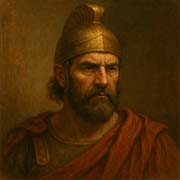
Poseidonthe Greek god of the sea and earthquakes and a brother of Zeus. The Romans called him Neptune.
Agamemnonthe king of Mycenae in Greek myth. He led the Greek army in the Trojan War of the Iliad.
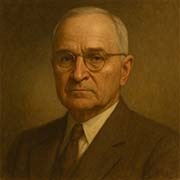
Harry Trumanthe 33rd president of the United States, in office as the Second World War ended.
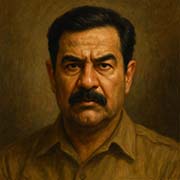
Saddam Husseinthe dictator of Iraq, known for his wars with Iran and Kuwait and for repressing his own people.
The myth about the Overseer
"The Overseer is a dry bore who only cares about rules and profit. People mean nothing to them."
The Overseer does count effort, use and results. What they're counting is whether the work serves the people who rely on it. That's why comfort, health and a decent place to work matter so much to them, and they want the same for others.
Honesty and a good name matter to them, and the warmth is real. Inside, they're easily moved. The warmth shows in deeds, which people can miss, because the words come hard.
What looks like indifference is often a shortage of words: loud emotion leaves them without any. Waiting and uncertainty wear them down too, and that cost is real.
Questions about the Overseer personality type
Yes, it's the same type under different names, and Overseer is our name for it. ESTJ is its name in MBTI, Te-Si is Jung's line, and Stierlitz (LSE) is its name in socionics. All these systems grew out of Jung's research. Whichever name you met first, the type behind it is the same.
No, because the type comes from how the mind is built, and that doesn't change. What changes is skill and habit. With age the Overseer tends to stop fighting every case of sloppiness and learns to rein in their sharpness. Weak spots can be developed, and the strong sides stay in the lead throughout life.
For them a job that's only half right is a promise broken. A shortcut or an easy win makes them suspicious, so they take a second look. Doing it properly is also how they show respect to the people who will use the result. The price is a tendency to overcomplicate and to carry more than one person should.
Mostly through deeds. They see to a steady income, good meals, enough sleep, health and order, and they give a sense of security. They take charge and teach, and the feeling behind it is warm even when the words are few. Sometimes the care turns into too many rules and routines for the other person.
They have little feeling for the flow of time, so an open ending leaves them nothing to hold on to. Waiting wears them down. What helps is a clear goal and a date, calm support and a routine that fits their strength. It also helps to have someone who explains big changes without scary forecasts.
A last word on the Overseer
The Overseer carries a heavy load without fuss, so others seldom notice how much it is. They judge a job by whether it is done properly, and a person by whether they keep their word. The type explains how this mind works, and each Overseer adds a life of their own to it.
The doubt won't go away on its own. A type assessment from your speech settles it
You can reread the page, you can take five more tests, and the doubt will still be there. Start with our free ten-minute test. If you still have doubts after that, a type assessment from your speech settles the question. For good.
The Premium Profile ($10) is about the Overseer: 11 chapters and about 60 pages on motives, work, care and closeness. Master Relationships ($30) is for the people around them. It's a set of two books, "A Relationship Guide to the 16 CoreTypes" and "A Field Guide to the 16 Types".