A Herald notices the mood of a room before anyone speaks. They feel it rise and sink, and they feel who has gone quiet. Their attention goes there on its own. Soon they want to act on it, to lift the mood or give it direction.
A second sense works beside the first. It's a feel for where things are going. A Herald often knows where an event will lead and when the moment to act has come. They judge today by where it's heading, and the hope of better times is what gives the present meaning.
Their feelings are out in the open, and their tone can swing from solemn to playful in a moment. They catch fire easily and can sink just as easily. All the while, they keep track of the room's mood and where things are heading, and they weigh what to do next. Someone else's tone quickly changes their own mood.
What they often lack is steadiness, since their feelings run high and keeping things in order takes effort. They're drawn to people who hold a steady course, state the rules plainly and set limits without fuss. A calm, clear order around them means a great deal. Next to such a person, strong feelings have somewhere to land.
Judgments and conclusions usually rest on what anyone can see and check in the things, tasks and people all around.
A Herald trusts facts that are published or checked. Ideas nobody has backed make them wary. They want an idea confirmed from outside before it feels solid.
2 of 4
Intuition and sensing
How a piece of work will unfold is usually sensed along the way, early enough to steer people and effort.
A Herald first looks at a problem from the widest angle. In their head, a small beginning grows into a large plan. Inspiration tends to arrive on its own, and ideas keep coming. They see where events are going before they see the details of the moment.
3 of 4
Ethical and logical
A room's mood usually registers at once: how charged each person is and how feelings travel from one to the next.
A Herald sorts people and events into good and bad, worthy and unworthy. A Herald cares about the moral standards of the people around them and tries to understand why others act as they do. Their opinion of a person or an act follows their attitude, and when the attitude shifts, so does the verdict.
4 of 4
Rational and irrational
An opinion of a person or a situation usually forms as a whole and holds until something serious changes it.
The Herald doubts before a decision and stops doubting after it. They rarely reopen a settled question. Being pulled off one thing for another irritates them, and something left half done weighs on them.
The most accurate free test for the 16 Jungian types
Ten minutes, and you'll know your type. The test looks at how you phrase your thoughts. The type in your speech doesn't change, so you only need to take it once. Your result shows the accuracy for each of the four scales.
A cognitive function is a channel the mind uses to take in and weigh one kind of information. Everyone uses all eight, and what differs between types is where each one sits. Some run on their own, some take effort, and one is a sore spot. Below, each function comes with its position and what that means for the Herald.
Valued functions
A person treats all four of these functions as their own, but in two different ways. In two of them, the person is strong and self-reliant. In the other two they're weaker, so they gladly accept help and notice people who are strong in them.
Ethics of Emotions mostly deals with feeling in the open, meaning the mood of a room and how it spreads. For the Herald it's the Leading function, the one that runs on its own, unprompted.
A Herald catches the smallest change in someone's tone and responds to it. A sharp tone across the table can feel like a challenge to the one they were setting. They set the tone of a gathering without noticing, lifting a flat group. Their range runs from warm sympathy to a burst of anger.
People catch their fire and follow, which gives them real influence. Keeping their own feelings in balance is harder. A strong feeling has to be held back, and sometimes it bursts out when nobody expects it. Afterward they need to let off steam.
Indifference hurts most, and a Herald pushes harder to get through to someone who doesn't react. An insult stays with them for a long time, and they expect to be treated with respect.
Temporal Intuition is about the way events develop. A situation has a stage and a direction, and this function senses both. A Herald uses it deliberately, as a working tool, to decide when to move.
It comes with worry. A Herald can see how things might go wrong, and the picture tends to be dark. They make backup plans, and having them is calming. Their warnings help the people close to them get ready, though some take them as pessimism.
The upside is a feel for timing. They sense when to move, when to wait and whom to nudge. A distant goal keeps them going, because they plan over long stretches. Being hurried or interrupted irritates them. So does a moment when nobody can say which way to lead people.
While others are still calm, a Herald may already be saying this won't end well, and explaining how it will play out.
They think about the meaning of life and the past, and like to be alone for it. Measuring time in small slices holds little appeal, since they see it in broad strokes. They also like looking back, and some feel nostalgic for an era that suited their views.
Volitional Sensing is largely about will and strength, from who stands their ground to how hard it is to push something through. In the Herald it wakes up when someone else gives a push, and it welcomes that help.
On their own, a Herald tends to put off starting and to waver. With a push from outside, they pick up speed fast, and once they're moving, their drive is hard to stop. What costs them most is pulling themselves together, standing up to pressure and simply getting on with it.
The right push comes from a firm, calm person who doesn't waver and doesn't flinch at an outburst. Strictness from that person keeps them in good shape, and a firm hand that softens now and then feels like care. A clear task with a follow-up check brings out a Herald's organized side. Small stages with progress reports work well.
Crude force is another matter. Pointless pressure, constant control and loss of freedom wear them out, and loud, showy pressure feels humiliating. They can't stand depending on someone else's will.
Structural Logic concerns how things are built. Systems, rules and the way an argument holds together all belong here. In the Suggestive position it's a soft spot that welcomes help. A ready-made order from someone else is a relief, while building one alone is hard.
They love a clean structure and spot the smallest departure from it, since what a Herald wants from a plan is clarity. Brief, clear statements from others impress them and stick in their memory. A fair split of duties and rewards matters to them. Disorder in small things annoys them, even though keeping order themselves is hard.
The effort lies in building the logic themselves. Without a framework, they follow their mood and fit the facts to it afterward. Their conclusions can be forceful and still one-sided.
They want honest, clean information, and having their own words checked stings. Being told "that's not how it works" stings too, and an argument built on unfamiliar logic leaves them tangled up. When a knowledgeable person hands over a method, a summary or an instruction, they stick with it as long as it works.
Unvalued functions
Here confidence and interest part ways. Two of these functions come naturally, without a second thought and without any need for praise. With the other two, the person goes by the book and doesn't aim for more. But under pressure from others, one of those two is where it really hurts.
Intuition of Possibilities has to do with options and hidden potential, with how a situation could turn out differently. It runs quietly in the background, and the Herald rarely brings it up.
It gives them a sense that a way out exists. Cornered, a Herald often finds one, though under stress their thoughts can slide toward dark pictures. They see other people's options well, while their own are harder to make out. Too many choices at once confuse them, so they'd rather stay with one situation and develop it.
This sense switches on when someone brings the Herald a plan. They quickly see where it could fail and suggest a fallback. If nobody asks, the thought goes unspoken, and later they may feel hurt at being left out. Being trusted with a plan matters deeply to them.
They draw people into a venture by showing what everyone stands to gain, and they hand out roles by ability. They prefer the direct route. Endless weighing of options and a vague "maybe this, maybe that" irritate them.
Relational Ethics deals broadly with relationships as lasting ties, with closeness and distance, loyalty and each person's place in a group. In the Ignoring position it marks boundaries and drives nothing forward. For a Herald, a betrayal within the family or a divorce is a serious, dramatic event.
Loyalty comes first. A Herald sticks to their principles, stands by their own people and feels a deep duty to family and group. They read a group's pecking order accurately, from who leads to who's the favorite and who doesn't belong.
The price is a sharp line between insiders and outsiders. Strangers and bystanders are met with suspicion, and betrayed loyalty is very hard for them to forgive. They listen politely to other people's moral views and keep touchy subjects to themselves until they understand the other person. Tactlessness, flattery and playing both sides irritate them.
Overeager kindness from a stranger makes them wary, and they test whether it's sincere. They dislike owing anyone, and some drift away from a helper to stop feeling obliged. Their trust goes to people who keep their word under pressure.
Practical Logic is about getting a job done properly. Methods, skill and proof that something works are its territory. In the Role position the Herald can produce it on demand. The result is passable, though it seldom feels natural.
A Herald respects craft and proven methods, and in front of colleagues they work carefully and neatly. Documents and small details often slip, because the idea comes first for them and the procedure second. A task already begun gets finished, even a dull one. What wears them down is an endless stream of routine, paperwork and rigid order.
When a job grips them, they give it everything. They work flat out without noticing they're tired, and switching to something else is then hard. When the flow of tasks grows, their attention scatters and the routine part piles up, to be sorted out later.
Working alone, they hold themselves to a high standard and get upset when part of the job doesn't come out right. A method someone else has worked out and explained makes the work easier. They bristle when someone doubts their competence or changes the agreed way of working without them.
Experiential Sensing covers the body and its surroundings, from comfort and food to rest, health and the feel of a home. It's the Herald's sore spot, the place that takes the most effort and gives the least back.
They notice harsh light and stuffy air fast, yet miss their own hunger and tiredness until their body gives out. They tend to see to their health late, and they handle pain badly. Illness makes them feel more alone, and visits and people asking how they are mean a lot to them.
Setting up a home is hard work, from what to buy to where things go and how a room looks. They love comfort and find it hard to create. Tactless commands hurt them, and so do comments about their looks, habits or home. Their taste is uneven, and they enjoy sharp contrasts of sensation.
Asked about their health, a Herald usually waves the question off, then suddenly turns out to need looking after. Care that tips into control tires them quickly. Calm, tactful help with the household goes down far better.
See yourself in this? That's only the beginning
The Premium Profile takes the Herald apart in 11 chapters and about 60 pages. It explains why a Herald feels the urge to fire people up. It also covers where the mood swings come from and what they can rely on in themselves. Once these things have names, it's easier to use strengths and waste less energy.
Their feel for open emotion lets a Herald lift a flat group and warm it up.
Because mood registers at once, a Herald reacts to bad news immediately and offers help without stopping to think it over.
The sense of how events unfold lets a Herald name trouble before it arrives.
The same sense keeps a distant goal in view, so a Herald can plan a mission that takes many steps.
Their quiet feel for options finds an exit, most easily for other people.
The sense of lasting ties keeps a Herald faithful to their own people and ready to make sacrifices for them.
Weaknesses
The mind's channel for the body and comfort sends only faint signals, so tiredness and hunger catch them by surprise.
The same channel makes setting up a home hard, and remarks about their looks or habits sting.
The practical side of the mind tires of an endless stream of paperwork and checking, so routine gathers and waits.
The practical side of the mind wobbles over money, so a Herald in business may ask far too much or work free.
The sense of will and effort waits for an outside push, which leaves the Herald unsure and leaning on a firm partner.
The sense of structure gives them little footing in an argument, and being caught in an inconsistency hurts.
Careers and money
At work a Herald sets the idea and the goal, then rallies people behind them. Strategy and inspiring people are their strong side, while routine administration is the weak one. They explain why a task matters and teach what they know. They're also quick to spot a risk and name it.
They work in bursts, and a task that grips them gets everything. A new one waits for its spark, and they dislike starting several at once. Results tend to come in late, because they want quality and hate redoing things. What wears them out is the endless stream of repetition.
With colleagues, a Herald respects hierarchy and recognized authority. They keep track of who stands where and who leads, and they dislike it when someone oversteps their place. They work best with people who stick to agreed rules.
As the person in charge, they lead through belief in the cause. They organize large groups and give out tasks by ability. They hand out many small assignments and then can't keep track of them all. Encouragement comes first. If a hard push is needed, they often have a deputy apply it.
What drives them is a mission, the feeling that the work matters, and recognition and warmth in the team. They need room to create and a clear sense of where they're leading people. Routine, paperwork and criticism of their professionalism drain them.
Money comes second for a Herald, and their spending follows their mood, so a careful partner helps. For big plans they look for patrons and sponsors. They can be generous on impulse and in public. A job inside an organization feels steadier than going solo, and pay that looks unfair next to what others get angers them.
Love and closeness
Closeness comes fast when a Herald feels support and a shared idea. They want to make a strong impression, yet they hold back a little to see how the other person responds. They look for someone reliable who fits into their world. They tell the truth about themselves early, since a lie discovered later feels like betrayal.
At home they see the family as an ordered whole where everyone has a place and duties. They want a partner their relatives accept. Everyday upkeep is hard for them, so a partner who takes it on is a real relief. Leadership is split: the partner sets the household order, and the Herald sets the mood of the evening.
Few things hurt more than a partner who takes a stranger's side against them. Infidelity, even a rumor of it, counts as moral betrayal. Being mocked for what they hold dear, or feeling used, cuts deep as well. Behind all of it is the fear of being pushed out and replaced.
A Herald shows feelings openly and strongly, and in love those feelings run strongest. Saying "I was wrong" is far harder, so they go quiet and wait for the other person to make the first move. Warm words of thanks and care don't come easily, and making a scene comes easier.
In quarrels their emotions build up, and without an outlet they may provoke a scene. Hurt shows as silence and distance, and it takes them a while to let it go. Making up takes an honest admission, a timely apology and a promise to tell the truth. A humiliation in front of others is rarely forgiven.
A mature union rests on a shared purpose and a settled order. Respect and some light teasing keep it alive, and what hurts it most is when will and feeling stall. A Herald is drawn to calm certainty, clear rules and a partner who stays firm through their outbursts.
Who the Herald is confused with
Harbinger (ENFP)
The Harbinger (ENFP) is the closest look-alike. Both are warm, quick to connect and at ease with strong feeling. Early on, the Harbinger picks up the Herald's tone and mirrors it back, so the two can seem exactly alike.
A Herald's feelings build up, come out loud and direct, and aim at a distant goal. The Harbinger keeps the surface calm and light, switches between moods and leaves several routes open. The Herald thinks in terms of the cause and the future. The Harbinger thinks about the next gain and the next risk.
Flamekeeper (INFP)
The Flamekeeper (INFP) is mixed up with the Herald less often. They share two subjects, the mood of a room and the way events develop, and both read atmosphere well.
The Herald uses that reading to steer the room. The Flamekeeper keeps the reading to themselves and waits. The Herald steps into a fight and wants to lead it, while the Flamekeeper watches from the sidelines, close to someone strong.
If you're torn between two types, there's one way to settle it: a type assessment from your speech, recorded or live.
Every pair of types has its own way of fitting together. The cards below describe how each relationship usually feels from the Herald's side. The blog has detailed articles on every pair. People vary, so read these as tendencies.
Trust with the Sentinel forms within minutes and stays easy. The Sentinel supplies a firm frame, routine and protection, and the Herald supplies meaning and belief in the future. Friendly competition and light teasing keep the pair lively. Standing still together is what wears them down.
Sparring starts at the first meeting. The Warlord gives orders, checks results and judges plainly, and the Herald hears lectures and tires of the control. The Herald fires back a sharp remark and a moral verdict the Warlord didn't expect. In close moments the Herald turns playful, until the jokes wear thin and the Warlord brings back a strict tone.
Closeness arrives fast, since both read each other well, and the Flamekeeper brings tenderness and a romantic touch. The Herald carries more of the practical load while the Flamekeeper puts things off. The Flamekeeper's feelings come and go, and the Herald reads that as broken loyalty. Even so, the Herald waits, forgives and takes them back.
Two Heralds bond over a shared conviction or a creative aim, often as teacher and student. They head the same way without leaning on each other. Each points out mistakes the other already sees, while the weak spots they share, home life among them, stay unfixed. Two leaders in one small team can crowd each other.
Things start formally, and talk soon turns to judging each other's conduct and work. The Herald wants a say in who joins the shared future and resists simply carrying out someone else's project. The Grandmaster slows the Herald's enthusiasm, and being told to cut back on their needs feels like a loss of standing.
It starts out light and warm, modest and tactful, with a lyrical touch. The Custodian's strict self-discipline steadies the Herald, though the effect doesn't last. The Herald teases and dares the Custodian to react, and gets no response. The relationship usually settles into polite distance, with respect and some caution.
Both set the tone of an event, in opposite keys. The Beacon brings lightness and laughter, and the Herald brings seriousness and growing solemnity. At a cheerful table the Herald tends to add a grave note. Jokes about the Herald's mood sting and linger, while the Beacon makes up quickly.
Both push forward at the same speed, and the work begins with shared enthusiasm. The Executor is stronger on the practical side, so the Herald leans on the idea and on gathering supporters. A change made without agreement irritates the Herald, who may denounce it at a meeting as a breach of order.
At first the Herald feels understood without words, because the Harbinger catches the Herald's mood and hands it back. Later the Harbinger's even tone, jokes and shifts of mood can read as indifference. For the Herald a lie breaks trust, and they keep testing whether the Harbinger will act on convictions and pay the price.
Gentleness and romance draw the Herald to the Sage at first, even though the Herald usually distrusts eager kindness. When the Herald calls for a fight, the Sage replies with a joke or asks them to calm down. The Herald takes it as a brush-off. Being closely watched over routine, health and food wears the Herald out.
A strong, decisive character draws the Herald, who finds support where their own drive is weak. The Herald enjoys the teacher's role while the Duke listens like a student and does many favors. It tires the Herald when the Duke promises much and delivers little. When the Duke grows independent, the Herald tends to cling on jealously.
Fiery ideas, rebellion and quick wit impress the Herald, and the Catalyst's favor feels like an honor. A shared struggle with housework bonds them like fellow sufferers. The Herald asks where to lead people and rarely gets a firm answer. Frequent changes of plan and a patronizing tone wear trust down.
The Seer's distance from the common cause intrigues the Herald: whose side is the Seer on? The Seer's reserve and habit of weighing pros and cons keep irritating the Herald, who wants wholehearted involvement and honest answers. The Herald presses harder when the Seer slips away. The Seer absorbs the feeling and gives nothing back.
The Harmonist shows warm interest in the Herald's successes, then keeps asking about looks, clothes, health and food, with advice attached. The Herald feels evaluated and keeps a distance. Still, they keep bringing new achievements and get a mix of interest and prickliness in return.
From a distance, the Overseer's order, endurance and hard work attract the Herald, who quietly envies them. Up close, professional nitpicking and a withdrawn silence leave the Herald speechless. The Herald talks a lot, and the Overseer goes quiet. The Herald accepts the Overseer's care only after testing it.
The Craftsman's solidity and practical sense draw the Herald in. The Craftsman doesn't answer feeling with feeling. When the Herald raises the heat, the Craftsman goes still or leaves. A joke at the expense of the Herald's achievement lands hard.
Famous Heralds
VishnuA major god of Hinduism, the preserver of the world, who appears on earth as Rama, Krishna and other avatars.
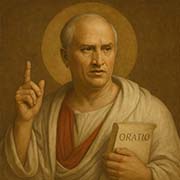
CiceroRoman orator, statesman and writer of the first century BC, remembered for his speeches and letters.
Martin Luther King Jr.Leader of the American civil rights movement and winner of the Nobel Peace Prize in 1964.
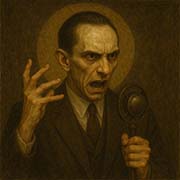
Joseph GoebbelsMinister of propaganda of Nazi Germany from 1933 to 1945.
A myth about the Herald
"The Herald makes drama out of nothing and plays with other people's feelings,"people say. A Herald does show feeling openly, and they have little reason to hide it. What shows is what they feel, and their effort to carry others along is genuine.
Their alarm is often well founded. This mind tends to sense trouble before it arrives, and a warning lets people prepare. They rarely use their pull over people for gain, since their self-respect rests on moving people toward good.
The cost is real, though. The intensity can tire people, and the tone sometimes runs ahead of the facts. In an argument they're losing, they may push too hard to persuade. That's a problem of volume, not of pretense.
Questions about the Herald personality type
Yes, it's the same type: ENFJ is the MBTI name, and Hamlet, with the code EIE, is the socionics name. In Jung's shorthand it's Fe-Ni. All these systems grew out of Jung's research, and they agree on the core: feeling and the course of events. Here the type has one name, the Herald.
No, the type itself stays the same. It describes the stable side of how a mind works: what it notices on its own and what takes effort. A Herald's views, habits and life choices can change a great deal, even flip to the opposite. Different tests and different moments of life can give different results, because they measure different things.
A Herald responds to the smallest shift in the mood of the person in front of them. They can feel another person's emotion almost as if it were their own. Then they find the tone that lifts a group out of dullness or worry. The price is a heavy dependence on others' moods and opinions of them.
The Herald's sense of time follows a situation forward and names what comes next, especially trouble. Worry is a by-product, and it also works as preparation, since they think through backup plans. Saying the fear out loud helps, and so does breaking a vague "what will happen?" into a few clear steps.
The part of the mind that handles the body, rest, food and the home sends only weak signals. So every chore takes effort that others don't notice, and criticism makes it harder. What helps is a person who handles the routine without lecturing. A clear arrangement and small, regular reminders help too.
Knowing your type for sure
For a Herald, being sure of their type explains old patterns and shows where to put their effort. Doubting the result is common, and there's a clear way to settle it.
The doubt won't go away on its own. A type assessment from your speech settles it
You can reread the page, you can take five more tests, and the doubt will still be there. Start with our free ten-minute test. If you still have doubts after that, a type assessment from your speech settles the question. For good.
There are two books about the Herald. The Premium Profile ($10) has 11 chapters and about 60 pages on what drives the Herald and what drains them. It also shows how the Herald's work and closeness are built. Master Relationships ($30) holds "A Relationship Guide to the 16 CoreTypes" and "A Field Guide to the 16 Types".