Any plan starts with the same question for the Executor: what will it give, and what will it cost? A job with no clear point usually doesn't get started. A faster route or a better method catches the eye at once. Slow people and red tape tend to wear on them quickly.
They also feel the moment. A sense that now is the time, or that it's too early, arrives before any argument does. They like to act ahead of events and take a risk once the numbers look right. Forced waiting is something they hate.
Quick and sure of themselves, they rarely admit defeat. Their mind keeps a running tally of what pays and when. A missed chance stays with them, and they go back over it to see what to change. Time feels expensive to them, and they hate to see it wasted. They value skill and results in people and judge them fast.
What they lack is warmth and a clear sense of who's really on their side. Looking after the body and resting don't come naturally either. They're drawn to a calm person. Such a person offers all of that without fuss and holds firm moral principles.
Judgments and conclusions usually rest on what anyone can see and check in the things, tasks and people all around.
The Executor wants to see for themselves how something behaves in action. In science and in business they lean toward practical models and get their hands on a thing before theorizing about it. A new idea gets judged straight away by what it can be used for.
2 of 4
Intuition and sensing
How a piece of work will unfold is usually sensed along the way, early enough to steer people and effort.
The Executor usually knows what a project is for as a whole and can explain the goal to the people around them. They tend to push several strands of a venture at once and wait for them to add up. Big tasks hold their interest, while a string of small, unconnected jobs wears them down.
3 of 4
Logical and ethical
The first question is usually what the facts bear out, what actually gets results and how it'll all turn out.
The Executor likes to get to the bottom of things and verify what they're told. In business they lean on objective criteria. They go through the facts that matter and still hear out new ideas. When they have a hunch about how something works, they try it out in practice.
4 of 4
Rational and irrational
Reasoning tends to come in finished steps, each with a beginning and a conclusion, and anything left unfinished feels like a weight.
The Executor likes a task laid out clearly, and acting blind without that picture rarely appeals to them.
The most accurate free test for the 16 Jungian types
Ten minutes, and you'll know your type. The test looks at how you phrase your thoughts. The type in your speech doesn't change, so you only need to take it once. Your result shows the accuracy for each of the four scales.
A cognitive function is one of eight ways a mind takes in information and decides what to do with it. Each sits in a fixed position, and the position matters as much as the function. It sets how natural the function feels, how much effort it takes and how much a person leans on it. Below are the Executor's eight.
Valued functions
A person treats all four of these functions as their own, but in two different ways. In two of them, the person is strong and self-reliant. In the other two they're weaker, so they gladly accept help and notice people who are strong in them.
Practical Logic deals first of all with what works. That takes in how things get made and run, what they cost and whether the result was worth the effort. In the leading position it needs no switching on.
Each activity meets the same question: what is this for, and what do I get out of it? A job that's all process and no result rarely gets started. Their working rule is to act effectively, even at some risk, for the biggest gain.
Other people's plans get the same test. The Executor spots a weak point, and the fix is ready before they've asked whether it's welcome. Concrete use matters to them. A theory earns interest only when it pays off. They also want to understand how a whole company or country fits together.
They judge people the same way, quickly, by skill and results. Being checked step by step feels like an insult. The Executor expects trust, sets their own pace and standard, and usually judges the result.
Difficult circumstances sharpen them. In a tight spot they stay level-headed and work out what forces and resources are at hand. They find allies and calm the people around them.
They keep their word, but small things slide. Details, paperwork and repairs wait, and the finish comes out rough.
Temporal Intuition has to do chiefly with time as people live through it. That covers how fast things move, what stage a process has reached and where it leads. It's a tool they use on purpose, to decide when to act and when to hold back.
A feel for the moment comes first, and the reasons follow. A promising stretch looks different from a stuck one. They like to get ahead of events and are often early to try new technology or new ways of organizing work.
A plan can come together almost in a flash and be turned around at the last minute. They also hedge against every long-term outcome, which sometimes pulls them toward work that is useful only in theory.
Waiting is the hard part. They hate being forced into idleness and find it hard to turn to something else in the meantime. Oddly, the waiting often makes them miss the very moment they were waiting for.
A job that looks pointless in the long run is hard to start, and from outside that can pass for laziness. Slow people, long lines and traffic jams irritate them, and a day without serious business leaves them uneasy. They set the pace for others as they do for themselves, and not everyone can keep up.
Volitional Sensing deals mostly with force and will. That includes holding a position, wanting something definite and going after it. In the mobilizing position it works best when someone hands it a clear target.
Left to themselves, the Executor can be slow to make a firm decision or to start something hard on willpower alone. Give them a clear goal with a point, a plain request or a strong partner, and they take the lead at once.
Pressure from another person has the opposite effect: the harder someone pushes, the more firmly they dig in. A gentle but inventive nudge works far better.
Day to day, they rarely give orders or lean on anyone. They organize, split up the work and get people interested. They also avoid asking for things, because a refusal stings. Power appeals to them as room to get things done. They see interference and goals imposed from outside as a threat.
They may simply ignore an order that's plainly unfair. They respect people who hold their ground in a head-on clash and want to be like them. Thinking about the consequences weakens their resolve, though.
Goals sometimes prove to be mirages, and much depends on how fast they drop a mistaken plan for a new goal. Those who answer an argument with pressure put them off.
Relational Ethics concerns, among other things, where people stand with each other. That covers who's close or distant, who counts as one of us and whom to trust. In the suggestive position, it's where the Executor is glad to let someone else guide them.
What they value here is what lasts, such as friendship, love and loyalty to a cause and a team. They want closeness where personal matters can be shared calmly and with trust, without a display of feelings. Hypocrisy gets none.
Telling a real friend from someone who deserves caution is hard, so they need someone to spell it out in detail. They often catch a lie late, by reasoning it through, and once it's proven they remember it. Trust lost that way rarely comes back.
A crisis between partners is hard for them. They can't find the way out alone and wait for the other to lead them out.
Their warmth shows in deeds, like help at the right moment, a favor or an effort made for someone. Kind words alone leave them unsure, and they need regular signs that feelings haven't changed.
They handle social obligations briefly, with a short visit before heading back to business. The Executor sincerely feels the debt is paid, so close people may feel hurt when no hurt was meant.
Unvalued functions
Here confidence and interest part ways. Two of these functions come naturally, without a second thought and without any need for praise. With the other two, the person goes by the book and doesn't aim for more. But under pressure from others, one of those two is where it really hurts.
Intuition of Possibilities is largely about options and potential. That means what could turn out differently and what a person or setting might become. Here it stays quietly in the background and rarely takes the lead.
Most visibly, it makes the Executor compare their own abilities with other people's. They feel a pull to find their limits in strength, endurance and courage, and to try whatever's new and untested. They look up to people who went far through hard work and foresight. They also feel this drive exists to help the weak and those in trouble.
Being told to copy someone else's success irritates them. They decide for themselves what's worth imitating.
To them, luck feels repeatable: if it worked once, it'll work again. They rarely plan for failure and push doubts away quickly. After a setback, they come up with a new plan just as energetically. They are restless and curious, and tend to change interests, jobs and places until they find their own.
Ideas tossed around in conversation feel like entertainment. They take an idea seriously once it serves something they're after. Anything new they read about gets tested for use first.
A gloomy forecast about a new plan hurts them. Once someone close has raised the alarm, they stop sharing what they're planning.
Structural Logic covers how an argument or a plan is built: its parts, its boundaries and the links between them. As the ignoring function, it gets used only as the job requires. They keep to rules when the work calls for them. A system's neatness interests them little for itself.
They gather the information a job needs from sources they trust, and verify it. They're quick to spot a gap in someone's reasoning or a fudged fact. Shown a tidy framework with no data behind it, they ask where the data comes from.
Facts and a consistent argument persuade them. If a trusted source turns out to be wrong, it feels like a betrayal. They rely on methods proven in their own experience and take criticism of them badly.
They keep the research short, since a drawn-out investigation would hold up the job. They tend either to stick to one strict scheme and derive everything from it, or to do without structure altogether.
In their own venture, the Executor sets the team's roles and rules and rarely lets anyone bend them.
Ethics of Emotions takes in emotion as people show it and others see it. Mood and atmosphere belong here, and so do the ways people meet, quarrel and make up. In the role position the Executor handles it on demand and passably well, though it doesn't feel natural.
Feelings serve the job and come out in whatever form it calls for. The Executor may show none, or show the opposite of what they feel. They keep a set of roles for different tasks. Among them are the carefree joker, the sympathetic listener and the life of the party.
Worries stay underneath, and only the closest people ever see them. It isn't always clear to them what emotions are for: one moment the jolly buddy, the next a show of sternness.
Small talk turns into trading information and arguing, which others can read as hostility. When a dispute heats up, a light tone from the Executor often lands as a brush-off. The other person gets louder.
Being mocked in public leaves them speechless, and they answer later, through action. Reproaches, scenes and other people's anger unsettle them badly, and constant nagging can do lasting damage to a relationship. Strong emotion rarely comes out spontaneously, so they can look stiff where people expect a big show of feeling.
Experiential Sensing belongs largely to the body's own signals and to looking after the body. In the vulnerable position it's the Executor's sore spot.
To them the body is a tool that's simply expected to work. They're poor judges of how they feel physically, and self-care counts as extra work. Food and sleep are fuel for work, and rest comes when they decide. An order to lie down gets a sharp reaction.
Illness frightens them mainly as a way of being shut out of the work, so doctors come last. They keep fit through sports and trips outdoors, though they don't really unwind even on vacation.
Hardship on the road is easy for them to bear. A small discomfort at home, though, bothers them more than they'd expect and embarrasses them. Household order and comfort hold little interest, so chores pile up.
They feel unsure about their taste, looks and manners. Many don't think of themselves as attractive and dislike being looked over. A remark about any of this sets off a sharp defense. They fully relax only beside someone who thinks ahead about what they will feel and arranges rest without questions or criticism.
See yourself in this? That's only the beginning
The Premium Profile goes through the Executor piece by piece, in 11 chapters and about 60 pages. It explains where their payoff-first habit comes from, what they fear, and how they handle setbacks, work and love.
Once these are put into words, it's easier to choose tasks that deserve your energy.
Their habit of weighing every job by payoff (Practical Logic) lets them match people to tasks and show what each gains.
The same payoff-first habit makes them promise little, deliver more and dislike owing anyone.
Their feel for timing (Temporal Intuition) spots a gap, and the stage a venture has reached, before others do.
The same sense of the moment makes them early adopters of new technology and new ways of organizing work.
The fact-checking side of their mind (Structural Logic) notices gaps and fudged figures in other people's arguments.
Their appetite for testing limits and trying again (Intuition of Possibilities) brings a new plan soon after a failure.
Weaknesses
Without a clear goal or a request, the will to begin something hard (Volitional Sensing) is slow to switch on.
Telling a friend from a flatterer (Relational Ethics) is hard for them, and a proven lie usually ends the trust.
The relational side of courtesy gets a quick visit, so close people can feel brushed off though no harm is meant.
Showing emotion on cue (Ethics of Emotions) leaves the real mood hidden, even from people close to them.
Other people's scenes and accusations (Ethics of Emotions) rattle them, and they pull away or, if cornered, answer sharply.
The body's signals (Experiential Sensing) register late, so they keep pushing, and remarks on their looks sting.
Executor careers and money
The Executor does best where the job is to find a profitable move and set it going. They notice gaps and new needs early. They do well as the one who thinks ahead, speeds a process up or pulls people together for a task. Polishing a piece of work into its final form is the part they like least.
Their working days are packed and tend to get fuller as they go. The plan is only a means to the goal, so they change it freely. They work best at their own pace and by their own standards, with little patience for slow partners or red tape.
Day to day, the Executor treats colleagues of any rank as equal partners. They expect full effort and enthusiasm in return. When a job heats up, they start giving instructions like a boss and take it badly when they're ignored. Under a boss, they're glad to work on anything useful. In a rigid hierarchy they rarely last long.
As the one in charge, they gather people for a task and give each person a part that fits their ability. They keep people on board through interest and a share of the gains, and rarely by force. The team often changes: people come together for the job, finish it and part. They lead like-minded people best.
What drives them is a big result that sets them apart, along with the pleasure of the work itself. A personal stake in the outcome helps a lot. Pointless paperwork wears them down, and so does work that goes unused or underpaid. They rarely stay long in such places.
Money is a means, and earnings go back into the work. They usually weigh a risk in advance, though easy money tends to go into ventures they haven't checked well. Some of what they invest gets lost, and they count on the rest paying off. In a job or in their own business, they do best when pay follows results.
Executor in love and relationships
The Executor starts a relationship with a practical move. They clear distance and obstacles out of the way so things are easy for the other person. They hope the partner will make the first move emotionally. Their own move usually comes as a down-to-earth suggestion to give it a try and see how it goes.
They see life together as a joint project, with the two of them as a team. They want a home base where someone is waiting for them, because without it risk and work lose their point. In return they bring optimism, a taste for adventure and confidence about tomorrow. Household routine is something they'd rather hand over.
The deepest hurt is being pushed away. A partner's distance, a refusal of closeness or harsh words about their looks can leave them feeling unwelcome for a long time. Jealous scenes frighten them, and unfaithfulness tends to feel like a verdict on the whole partnership.
Their feelings show in action and practical help, and usually briefly. Hints tend to pass them by, so plain words reach them best. They're shy about naming their feelings first, but a warm word said to them directly lands very well. An open person who admits their worries wins them over faster than one hiding behind forced cheer.
Raised voices and a flood of accusations are what they find hardest. When attacks drag on, their interest fades and they spend more time away. They rarely hold a grudge and like to make up fast, and making up feels like something to celebrate.
For the Executor, a mature union looks like a well-run team with trust, friendship, mutual help and few rituals. What suits them in the long run is a calm partner. Such a partner says plainly what the relationship is, takes the lead in feelings and holds to clear principles.
Who the Executor is confused with
Catalyst (ENTP)
The Catalyst (ENTP) is the type the Executor is mistaken for most often. Both are energetic, quick to find allies and resources, fond of an argument between equals and eager for a new venture.
They part ways on what counts as the result. The Executor weighs what will pay and pushes the job through to the finish at the right moment. The Catalyst is most engaged while an idea is new. Once the idea is worked out and the job reaches its finishing stage, their attention moves on.
They also differ on what persuades. The Executor trusts what they've seen and tried themselves. The Catalyst builds a well-knit case for the view they hold.
Overseer (ESTJ)
The Overseer (ESTJ) gets confused with the Executor now and then. Both put the job first, like to lead, expect full effort from a team and hate wasted time. On first meeting, both are charming and enjoy new people.
The difference lies in how each treats the new. The Executor gets ahead of events and bets on the untested. The Overseer collects the best proven methods, polishes them and keeps the system running. The Executor often learns by trying and picks up knowledge as the job demands, while the Overseer prepares thoroughly and double-checks.
If you're torn between two types, there's one way to settle it: a type assessment from your speech, recorded or live.
The Executor gets on differently with each of the sixteen types. Each card shows how a pairing usually feels from the Executor's side, with a detail or two. The blog has detailed articles on every pair.
What the Executor lacks, the Custodian supplies: a steady base and a sense of who to trust. Before a long or risky venture, the Executor wants to know that someone is waiting. The Custodian gladly keeps up with their pace and asks in return for sincerity and an even temper. A calm moral compass is part of what they bring.
Strong drive and strong feeling make the Duke hard to resist, and the Executor soon gets swept up in the Duke's plans. It feels good to be needed. Both like to take the initiative and leave each other little room. The Duke's wide-open interest in everyone unsettles the Executor.
The two run at different speeds. The Executor hurries and packs the day, while the Seer waits for the right moment and comments from the sidelines. The Executor wants a clever partner to pitch in and mostly gets observations. A shared knack for making a living out of very little keeps them close.
Friendship forms fast around shared interests. Each then expects loyalty and respect from the other and finds an equal who also wants to lead. Talk runs on ideas and plans, and who will do the work stays vague. The bond holds when interests don't collide and the shared task matters to both.
First impressions of the Sage are strong, thanks to decency and warmth. To the Executor, kindness like that can look like an advance on a bill still to come. The Executor pays it back quickly and insists friendship should come free. They sketch a task in outline, and the Sage wants the method spelled out.
Order and care come with the Sentinel, who looks dependable and sees the Executor as bold and resourceful. They start with trust and respect. Then each wants first place in the shared job, and the Sentinel's guarded outlook on people feels foreign to the Executor. Both value the bond and try to repair a rift.
Rough sketches get polished by the Overseer, who also forgives mistakes and looks after things without being asked. The Executor values this but is restless with a single proven method and follows an instruction for only so long. A lively, crowded house relaxes the Executor, who tends to steer quiet family talk onto other subjects.
Two equally energetic people start a job eager to do it better and faster. Then they split over methods: the Executor leans toward new ones, and the Herald loudly defends proven ones. A reproach that the firm belongs to everyone hits the Executor's sorest spot: the fear of being pushed out of the work.
The two argue as equals, without ceremony, and ideas never run short. The Catalyst produces them and the Executor works out how to carry them through. Both find resources and win people over. The strain comes from rivalry over who leads. Tempo differs too: the Catalyst works at a leisurely pace, and the Executor tightens the schedule.
Both are level-headed, and at first the Executor values the Grandmaster's thoroughness. The strain comes from risk. The Executor changes direction on the move and shortens deadlines. The Grandmaster wants full answers before joining an experiment and won't back risky turns. The Executor feels the initiative being held back.
Following the Executor's lead comes naturally to the Warlord, who learns their methods and looks for approval. The Executor enjoys being the one whose know-how is wanted and is generous with advice. Still, the Warlord's strong will brings demands for reports and a ban on improvising. When the Executor asks for help with people, the Warlord tends to sidestep.
A route to big, quick success by an unusual road is what the Harbinger shows. As the pupil, the Executor trusts them almost completely and feels in their debt, but hedges with only a small stake. When something goes wrong, the Harbinger says luck will come next time. That matches the Executor's own optimism, so the Harbinger's standing lasts.
Politeness and kindness from the Flamekeeper look like the warmth the Executor wanted, and the Executor wants to help and give. In return they expect support that's generous and freely offered, since having to ask for what's due feels humiliating. The Flamekeeper's relaxed attitude to work baffles the Executor, who responds with tight schedules.
The Craftsman notices the Executor's trust and business success. The Executor gets company and ideas, and pays for it in time and lost pace. A quick visit turns into a long talk while the job stands still. The Craftsman's hints and roundabout routes replace the clear aim the Executor wanted.
At a distance the Beacon is fun: cheerful, surrounded by company and useful acquaintances. A joke at the Executor's expense in front of others stuns them, and they have no answer ready. Heart-to-heart talks about who offended whom tire the Executor, who prefers to answer with action. The Beacon's strong emotions and quick shifts catch the Executor off guard.
The Harmonist is friendly, funny, quick to settle things and attentive to small details. Trouble starts when every remark begins to sound like a reproach. Demands for a report on their day sound to the Executor like being edged out of their own work. The Executor needs room to leave and come back, and feels stuck going in circles.
Famous Executors
Paul the ApostleEarly Christian missionary whose letters make up a large part of the New Testament.
Julius CaesarRoman general and statesman who conquered Gaul and became dictator of Rome.
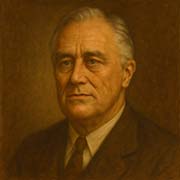
Franklin D. RooseveltThe 32nd US president, elected four times, who led the country through the Depression and the Second World War.
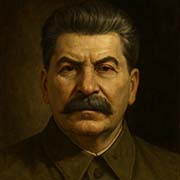
Joseph StalinLeader of the Soviet Union, whose rule brought mass repressions and the Gulag.
A myth about the Executor
"The Executor is a heartless workaholic who cares only about money and results,"goes the popular myth.
The Executor weighs gain and cost for the people they're responsible for, as well as for themselves. In trouble they look for a way out for the whole team, and they feel terrible if they've caused it harm. Losing a close person hits them very hard, though they hide it.
Behind the businesslike surface is a need for warmth and a clear moral frame. They value the close people who give them both, often more than they can show. Feelings come out in roles, so they can look drier than they are.
This isn't heartlessness; it's a blind spot. Their own tiredness registers late, and that is the honest cost.
Questions about the Executor
ENTJ is this type's name in MBTI. In Jung's line it's Te-Ni, and in socionics the same type is also known as Jack London, code LIE. All these systems grew out of Jung's research, so the names and letters differ while the starting idea is shared. The Executor corresponds to ENTJ on all four scales.
No. The type stays the same for life, and what changes is how it shows. In youth the Executor tends to be bolder and more restless. The search for a life's work may last for decades. Hard periods make the Executor more irritable and prone to complaining, while a close, trusted person brings out a gentler side.
Every risk starts as a calculation: what will it give, and what will it cost? The sense of the moment helps, because the Executor sees gain in coming changes and knows when to hurry. They like to test a small stake before a large one. Young Executors can be showy about risk, but experience makes their bets more careful.
Their body's signals arrive late, and looking after themselves feels like extra work. An empty pause also counts as lost time, so doing nothing brings restlessness, and orders to rest tend to irritate. What helps is a partner who plans rest ahead without remarks. A home where comfort needs no effort from the Executor helps as well.
They show feelings through deeds and loyalty, and talking about them openly feels staged. The Executor also fears making a bad impression or hurting someone when they're unsure what's appropriate. A warm word from someone else lands very well. For their part, they understand plain statements much better than hints.
What a type description covers
A type describes one part of a person: the way the mind takes in information and decides. Upbringing, health, work and the people around add the rest. Two Executors with different lives can look very unlike each other, yet the same habits of mind sit underneath in both.
The doubt won't go away on its own. A type assessment from your speech settles it
You can reread the page, you can take five more tests, and the doubt will still be there. Start with our free ten-minute test. If you still have doubts after that, a type assessment from your speech settles the question. For good.
The Premium Profile ($10) has 11 chapters and about 60 pages on what drives them, how they risk, work and love. Master Relationships ($30) is two books: A Relationship Guide to the 16 CoreTypes and A Field Guide to the 16 Types.