The Warlord's attention goes first to strength and will, meaning nerve as much as muscle. In any room they size up who is strong, who will give way and who will push back. They also notice what can be taken, held or pushed through right now. This happens on its own, and they act on it fast.
Next comes a sharp sense of place. The Warlord wants to know where everyone in a group stands, themselves included, and feels uneasy until that's clear. They like the rules fixed, with rights and duties spelled out, and they aim for the top spot. When they clearly lose, they accept it and let the stronger side lead.
Pressure brings out the best in them. The more obstacles appear, the more focused and stubborn they get. They decide quickly, stay calm in a tight spot and take risks readily. A long stretch with nothing to push against is harder on them, and their mood sinks.
Two things come less easily. One is a sense of where things are heading when nothing is certain yet. The other is a light, warm mood that can soften a tense room. The Warlord is often drawn to people who carry both.
Attention tends to turn outward, to the objects, people and setting right there in plain view.
The Warlord enters a situation straight away and closes the distance fast. Talk wears thin quickly, and they move on to doing. Once one area is secure, their influence tends to reach into the next.
2 of 4
Sensing and intuition
Size, strength, boundaries and what can be controlled tend to be noticed first, since the tangible is what draws the eye.
The Warlord is drawn to what's dense, solid and well made, and flimsy or half-finished work irritates them. The world looks like a layout of forces and borders. Who stands where, and what can be taken and kept, stays in view. They feel keenly how much better it is to be healthy, well off and strong.
3 of 4
Logical and ethical
When the work calls for it, a complex problem usually gets broken into parts to test options or back up a decision.
Several plans run through the Warlord's head, and the most logical one for the situation wins. Facts, statistics and examples from history carry their arguments, and they check a source before relying on it. They cut complex schemes down to a few clear steps. Once the logic holds, they assign the duties and set the tasks.
4 of 4
Irrational and rational
One impression or task gives way to the next without sharp edges, and an unexpected turn is usually taken in stride.
The Warlord goes in without full information, improvises as things develop and still gets results. They reorganize a venture without fuss once it stops looking promising. They don't split problems into mine and yours, and they expect friends to pitch in the same way.
The most accurate free test for the 16 Jungian types
Ten minutes, and you'll know your type. The test looks at how you phrase your thoughts. The type in your speech doesn't change, so you only need to take it once. Your result shows the accuracy for each of the four scales.
Each function sits in one of eight places in the mind, and the place decides how it behaves. One function runs without effort. Another does its job only when called on. A third stays shaky and leans on other people for help.
Valued functions
A person treats all four of these functions as their own, but in two different ways. In two of them, the person is strong and self-reliant. In the other two they're weaker, so they gladly accept help and notice people who are strong in them.
Volitional Sensing centers on strength and will, on who yields and who holds out. In the Warlord's mind it takes the leading place, so it works on its own and costs no effort.
In any situation, their attention goes to the balance of strength. The Warlord reads each person's strength and determination quickly and fairly accurately. Being at the center, with room to move, feels natural, and they don't like to hand over the initiative.
In a fight they can bide their time and strike at the right moment, because the goal and the initiative stay theirs. If the straight road is blocked, they go around it and work through other people. They hold on harder to power they've fought for than to power that came easily.
In a dispute over who decides, the Warlord often already knows whose word will stick. In a contest for position they don't give way, but after a clear defeat they accept the winner's lead.
All of this keeps them constantly on watch. What this mind fears most is being made a subordinate, depending on someone or having to ask a favor. Their position never feels secure enough, so there's always more to protect.
Structural Logic is largely about how things are built, from parts and borders to rules and who belongs where. Here it's the creative function, a tool the Warlord picks up on purpose to serve the leading drive.
The Warlord lays out rights and duties, and the main rule is that nobody acts on their own authority. They keep to their own rules strictly, too.
They also look for systems worth joining, such as a team, a family or a business, and fit into them. They often start with a small request or a concession, then take up the place and keep it. Inside a system they aim for first place and want its order respected.
Information works as protection for them, since a well-informed person is hard to knock off balance. Before an argument they pick the strongest evidence and think through the objections.
Their tactics are flexible. The Warlord won't willingly step down a rung. Still, a step back is fine when the direct move doesn't pay, because it's taken to gain ground later.
They welcome useful initiative inside the order and back it while keeping an eye on it. Anything that breaks the order they stop. The stricter that order gets, though, the more people look for ways around it and argue.
Ethics of Emotions has to do with the mood in a room and how strongly people show what they feel. As the mobilizing function it mostly follows other people's lead and switches on when they respond.
Among easy, cheerful people the Warlord visibly loosens up. A new circle is the exception: they start out careful and friendly, and soon they set the cheerful tone themselves.
At work and with people close to them, they keep their feelings under tight control. Their happiest feelings stay the most private of all. Even a partner sees little of them, because the Warlord fears looking silly, weak or dependent.
Anger comes out easily, and regret follows. Strong feelings run deep and cool slowly, and they can break out at the wrong time or on the wrong person. A heavy mood is hard to lift without warmer people nearby.
Their jokes can have an edge, yet they take an emotional push badly themselves. They also use strong feeling to defend their position. After a stretch of intense activity their mood and strength can drop, and they keep that to themselves.
Temporal Intuition's field is time as it's felt, where events are heading and what stage they've reached. In the suggestive place it's a weak spot, and the Warlord gladly takes in what other people offer here.
Waiting as a tactic is one thing, and waiting with no end in sight is another. When they set the aim and hold the initiative, the Warlord waits and then strikes. When they can only wait for news and don't know what's coming, it wears them out.
Judging how much time they have is hard, so their time either slips away or fills up with half-finished jobs. They expect the worst from the near future, prepare for it early and urge others to hurry. They foresee how events will develop only poorly, and they lose their footing when things slip out of control.
Gloomy predictions stay with them. At a turning point, though, they persuade themselves the odds are good. Good things feel earned, hard stretches feel temporary, and they brush aside warnings that their own venture may fail.
A calm, specific reading of the stage settles them at once, like hearing that the hardest part is over. A hopeful forecast said calmly helps too, while gloom and superstition irritate them.
Unvalued functions
Here confidence and interest part ways. Two of these functions come naturally, without a second thought and without any need for praise. With the other two, the person goes by the book and doesn't aim for more. But under pressure from others, one of those two is where it really hurts.
Practical Logic mostly concerns efficiency, meaning what a thing costs, how well it works and whether it pays off. The demonstrative function works fast and without strain, and the Warlord likes people to notice the results.
Shown a plan, the Warlord goes straight to the weakest joint and asks what happens if it fails. To them, there's no such thing as too much protection. In any venture they find the weak link and shore it up, putting effort where it pays.
They justify most of what they do by its usefulness, and their work is fast and good. They waste little and get a second and third use out of what they have.
They want this skill recognized. If nobody asks for their advice, the Warlord takes that as a low opinion of their ability. They give advice unasked, because they believe they know how it should be done. When someone does take it, they follow it through to a result.
In daily life they follow what's new, yet in their own field they stay with the old way and save. They gladly take on other people's practical affairs, until they become intrusive.
Experiential Sensing takes in much of bodily comfort, from rest and food to health and how a place feels. In the ignoring place it works as a limit, something the Warlord uses but doesn't chase.
A Warlord can get through a miserable stretch of a project and mention it only afterward, if at all. They need little when conditions are hard. For a goal they put up with discomfort and even boredom, and they don't spend effort on making things cozy.
When there's a choice, they like plenty and things that last. Shortage worries them, and having too little while others have plenty is what they dread. Their comfort comes from status and a firm place in the world, and soft living adds little to it.
Complaining and sickness irritate them, and their own illness scares them. Any offer gets the same first question: where is the catch, and where is the gain? An unstable position in the family, at work or in public life bothers them most, so they tighten the order around them.
Intuition of Possibilities looks at hidden potential, at what a person or a situation could turn into. In the role place the Warlord can call it up when asked, but it doesn't come naturally.
Good luck feels normal to them, and when something fails, their first thought is that someone should have foreseen it. They make plans boldly and cheerfully even when the outcome is uncertain.
They keep a run of bad luck to themselves, even from those closest to them. They watch for a catch and try to head it off, and they pick up the prevailing rules quickly while staying blunt.
Hidden potential is hard for them to see. Asked who on a team has the most promise, the Warlord names whoever has delivered most so far. With new people they stay careful until they know where each one stands and who's backing them.
When the chances are unclear and they keep weighing them, their drive fades and they hold back where a push was needed. A fight with a clear goal doesn't slow them like that.
Helping other people's potential grow isn't easy for them. It bothers them to think that those around them may rise higher.
Relational Ethics is largely about how close or distant people are, about loyalty and about who counts as one of us. As the vulnerable function it's the sore spot of the whole mind.
The Warlord catches the feelings people show openly and misses the ones they keep inside. Strong negative emotion around them leaves them at a loss. They can close the distance physically while the ethical distance stays where it was.
Their care shows in action. They fetch what's needed, sort the matter out and make the call.
Trust comes slowly, and they test people through work. The Warlord is afraid of seeming too kind, since people take advantage of kindness. So they can be short with the very people who ask for help outright. At the same time, they see themselves as generous and helpful, and often they're right.
A moral accusation first leaves them speechless, then brings a hot, long reply. Admitting guilt out loud feels like giving up authority, though they'll admit a clearly proven fault to soften the consequences.
When an ethical question is unclear, they settle it with a firm decision and skip the discussion. They'd like people to assume good intentions behind what they do.
See yourself in this? That's only the beginning
Recognizing yourself is only part of it. The next question is where all of this comes from in the Warlord.
The answer is in the Premium Profile. It has 11 chapters and about 60 pages. The chapters cover what drives the Warlord, what they fear, and how they work and love. Once you know the reasons, it's easier to aim your strength where it pays off.
Their feel for force and will (Volitional Sensing) pulls everything into one push at a decisive moment, with a slump afterward.
Because they read strength so well, they take responsibility for their side and find it hard to hand off a load.
Their feel for structure (Structural Logic) gives each person a clear place and clear duties.
A good eye for rules and ranks lets them give ground now to gain more later, though others often miss the plan.
Comfort means little to them (Experiential Sensing), so rough conditions barely slow them, though security remains a worry.
Their sense of cost, use and quality (Practical Logic) makes them thrifty with money and sometimes stingy with people.
Core weaknesses
Their sense of time (Temporal Intuition) is shaky, so open-ended uncertainty drains them and they respond by rushing.
Strong feeling they've held in (Ethics of Emotions) can spill onto whoever is standing nearby, and regret follows.
Their feel for mood in a room needs warmth from others, and without it they stay tense and cut off.
Hidden potential (Intuition of Possibilities) is hard for them to see, so they judge by track record and get surprised.
Few clues about it reach them (Relational Ethics), so their remarks can come out sharp enough to hurt.
Good luck feels normal to them (Intuition of Possibilities), so a failed plan sends them hunting for the missed step, often their own.
Warlord careers and money
The Warlord does best as an organizer who puts people where their abilities fit. Flexible tactics let them steer a situation and keep the initiative. They pick the moment for a decisive step and take a sensible risk when needed. They take charge where ranks are clear, and without ranks they hold back until they find a system to join.
They work fast and like to stay ahead of events, so delays make them impatient. On a roll they show unusual stamina, then slump. They set the same intense tempo for the people around them. Without a next goal or a contest, mood and output drop, and the job shrinks to petty admin.
In a team, the Warlord gathers capable people, promises a share of the gain and expects them to stick it out. Under a boss, giving orders comes easier than taking them. They need status, tasks of their own and real responsibility, and a commanding tone aimed at them gets pushback.
As the one in charge, the Warlord hears people out, then decides alone and answers for the result. Many Warlords lead from the sidelines and step in at the decisive point. In a big project they agree with others on who takes which smaller part. In a small operation of their own, they check every stage.
What drives the Warlord is status, climbing the ranks, good money and the thrill of a contest. They value push toward a goal more than polish. Standing still wears them down, and so do shaky footing, gloomy forecasts and endless objections to every order.
With money the Warlord counts carefully and hates overpaying. They're relaxed about small everyday sums, yet pressure to pay more than something's worth makes them dig in. They save and insure, and take big risks only where the ground is prepared and the gain is their own. In a business of their own, they bring in help when they're overloaded.
Love and closeness for the Warlord
The Warlord moves in fast and has little patience for waiting. They like to take the first step, and a refusal stings. They can play the attentive suitor, but only for a short while before the push comes back. Early on, they tell a new partner plainly what they're like.
In a partner the Warlord looks for a firm base, someone who brings support, protection and good connections. Home is a kind of fortress with its own rules. It opens to let things in and closes to protect what's been built. In return they offer protection, a steady living, organization and generosity.
Deception hurts them, especially in front of others. So does silence when they expected some response to how they feel. Close people often assume the Warlord needs no sympathy, and that assumption stings. Jealousy grows from the fear of being pushed out and left with no place of their own.
The Warlord holds feelings back, positive ones most of all. Saying "I love you" is hard, romance puzzles them and showing weakness scares them. Underneath there's a wish to be loved as well as respected, yet not every proof of love convinces them.
In a quarrel the Warlord leans on directness and pressure, and the pressure grows when a partner pulls away. Quarrels usually circle around who decides, the tone of a conversation and spending. They make up through practical help, gifts or generosity once a warm word is said, or through distance and mutual respect.
What holds a mature bond together is shared goals, mutual respect and no pressure. Partners find a workable distance, and time often softens the Warlord's hard temper. The Warlord is drawn to a partner who easily sets a warm tone and paints a bright picture of what's ahead.
Who the Warlord is confused with
Duke (ESFP)
The Duke (ESFP) is the most common look-alike. Like the Warlord, the Duke moves fast, takes charge and presses forward, and both size up who is stronger at first sight.
The difference shows in what they want from a win. The Warlord wins in order to keep and protect what they gain, and builds a tight, orderly circle around it. The Duke wants to be first in everything and to be seen as first, and shares the winnings among supporters.
Craftsman (ISTP)
The Craftsman (ISTP) is confused with the Warlord less often. Both get straight to work, waste little time on talk and care about results.
The Warlord pushes ahead and takes the lead. The Craftsman works at their own pace, watches calmly from the side and steps in when it counts. A Craftsman answers a sudden push with a strong first response but tires in a long fight.
If you're torn between two types, there's one way to settle it: a type assessment from your speech, recorded or live.
Every pair of types has its own pattern. These cards show how the Warlord usually gets on with each of the sixteen, seen from the Warlord's side. The CoreTypes blog has detailed articles on every pair. Each card describes a tendency, and two people always bring more than their type to a relationship.
The Warlord usually finds the Flamekeeper easy company. The Flamekeeper brings gentleness, admiration and a fine feel for people, and the Warlord handles money and practical matters. The Flamekeeper treats the Warlord the way the Warlord would like to be treated, and that wins trust. What strains this pair is lies and humiliation.
The Herald often catches the Warlord off guard. The Warlord opens with the usual bid for the top and meets an emotional force that doesn't back down. It surprises the Warlord that someone who seems slight can hit so hard. Teasing is common between them, and sooner or later a joke lands too hard.
Both want the lead, and neither takes the follower's seat easily. The Sentinel holds on to their own priorities, so the Warlord can't count on having the final say. When the Sentinel pulls away, the Warlord holds on harder. They also value different things: the Warlord builds up and shows plenty, while the Sentinel prefers life plain and orderly.
Two Warlords recognize each other fast and respect the same things. Each wants the lead, and giving way to an equal stings. Neither offers the warmth and protection the other quietly wants. These pairs often work best as allies at a respectful distance, steady and fair in their dealings.
The Warlord and the Seer start fast, on a shared taste for solid quality, caution and foresight. The Seer admires the Warlord's drive, and the Warlord listens to the Seer's forecasts. The Warlord hopes for confident, upbeat ones and often hears something foggier or darker, which grates.
The Harmonist offers warmth, pleasure and plain admiration, things the Warlord rarely gives themselves. The Warlord likes the Harmonist's health, endurance and easygoing nature. They differ in pace, though. That slow, relaxed way irritates a Warlord who wants every effort to count, and they differ on what matters most at home.
The Warlord and the Duke read each other's moves at once, since both lead with the same drive. The Duke is open and even-tempered, while the Warlord tends to bring business into personal matters. The Warlord hates to owe anyone, so gratitude can feel like a debt.
The Catalyst brings ideas, useful contacts and an eye for promising projects, and at first the Warlord is hooked. Trouble starts with the talking. Orders draw questions, the Catalyst keeps reopening plans, and the Warlord's quick, cheap, workable version meets the wish to do it thoroughly.
The Warlord often feels at once that the Overseer is one of their own. Both value order, solid work and keeping your word, and the Overseer's poise, taste and self-discipline impress the Warlord. Friction comes from how they judge who is right: the Warlord looks to strength, the Overseer to results.
The Warlord is drawn to the Craftsman's skill and quick hands, and a shared eye for results brings them together fast. Soon the Craftsman's vague promises and long delays start to grate. Asked to report back, the Craftsman feels pushed around, and the Warlord feels left out.
The Beacon gives the Warlord what they enjoy most here, admiring attention and the feeling of being the one who knows. The Warlord looks the Beacon over quietly, pleased inside and showing little. Fuss and constant joking wear on a Warlord who likes a steady tone. Letting go of this connection takes them longer than they expect.
The Executor draws the Warlord in with energy, stamina and a readiness to teach how things work. The Warlord gains knowledge, a sense of growth and a chance of quick profit, and tries to be useful in return. What bothers them is vagueness: no clear direction, someone steering without saying where, and little thanks.
A quiet Grandmaster with a sharp tongue and large claims draws the Warlord and puts them on guard at once. The Warlord sees a risk and tests it by getting involved. The Grandmaster answers with calls for fairness and a careful dissection of the Warlord's arguments. Long talks on abstract subjects wear on a Warlord who likes to act.
The Custodian's careful attention draws the Warlord at first and wears on them later. The Custodian means well and keeps offering advice and small corrections, so the Warlord starts to feel examined. Silent disapproval and little interest in the Warlord's own mood sting, and the Warlord grows less sure of being right.
From the first meeting the Harbinger impresses the Warlord with range, reading and polish. Both start out friendly. Then the Warlord tries to set a firm order, and their own friendliness hardens. Evasive answers, scattered interests and promises made in the Warlord's name irritate them most.
The Sage's gentleness and quiet attract the Warlord, who often wants to take them under their wing. Trouble starts when the Sage's concerns sound like a standing list of reproaches, and the Warlord feels judged. When the Sage goes silent, the Warlord tends to press harder.
Famous Warlords
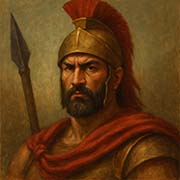
AresGreek god of war, son of Zeus and Hera, known to the Romans as Mars.
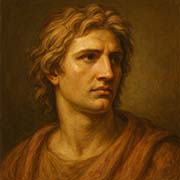
Alexander the Greatking of Macedon who built an empire reaching from Greece to India in the fourth century BC.
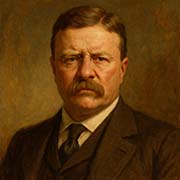
Theodore Rooseveltthe 26th president of the United States, awarded the Nobel Peace Prize in 1906.
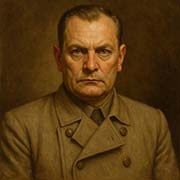
Hermann Goeringone of the leaders of Nazi Germany and head of its air force, sentenced to death at Nuremberg.
The myth about the Warlord
"The Warlord is a crude brute who settles everything by force and never thinks about people."That's the popular version.
For this mind force is a tool, and the Warlord measures out as much as the situation calls for. It keeps order and protects their own people, and it gets the job done. Capable people are welcome on the team, and the Warlord stands up for them. Rules are there for the same reason, so everyone knows where they stand.
Warmth reaches the Warlord, too. Next to a gentle partner the drive eases and their generosity shows. The same happens around anyone who senses the right moment and offers a bright view of what's ahead.
Kindness is where the Warlord struggles. The unspoken rules of closeness are hard for them to read. So their kindness can come out awkward, and criticism of it hurts.
Warlord personality type FAQ
The Warlord is ESTP in MBTI, Se-Ti in Jung's line and Zhukov (code SLE) in socionics. These are three names for one type, and all of these systems grew out of Jung's research. CoreTypes uses the name Warlord and describes the type through its cognitive functions.
The type itself doesn't change. It comes from how the functions are placed in the psyche, and life experience doesn't rearrange them. What changes is how the type shows. A hard temper often softens over the years, and skills and manners keep developing while the leading drive stays the same.
The Warlord reads strength at a glance, so a gap in leadership is easy to see, and they step into it. They get close to whoever matters and start the job with a push. Taking charge also guards against the position they dread most, being the one who takes orders. They do this most readily where ranks are clear.
Order is the Warlord's way of making a group workable. They spell out who owes what and who answers to whom, and they keep to their own rules first. They also look for systems worth joining and find a place in them. Even a partnership they treat as a system with someone in the lead.
Closeness, loyalty and what people owe each other are the Warlord's sore spot. Most of it is never said out loud, so it slips past them. A partner helps by setting a light tone and hinting at how to treat people. Trust that the Warlord means well helps too, even when the words come out clumsy.
About the Warlord type
Whatever else is going on, the Warlord's mind keeps asking who holds how much force and where the Warlord's own place is. The answers decide how the next move is chosen. Upbringing, health and choices shape the rest of the person.
The doubt won't go away on its own. A type assessment from your speech settles it
You can reread the page, you can take five more tests, and the doubt will still be there. Start with our free ten-minute test. If you still have doubts after that, a type assessment from your speech settles the question. For good.
One page is not enough for the Warlord, and that's natural. The Premium Profile ($10) describes the type in detail: 11 chapters and about 60 pages.
Relationships are in Master Relationships ($30). It's two books: A Relationship Guide to the 16 CoreTypes and A Field Guide to the 16 Types. You can start with either.