Left to itself, the Grandmaster's attention goes to how things are built. A situation breaks down into parts, and the links between them show up. They see what follows from what, and where a rule holds and where it stops. It all runs in the background, without anyone asking, and they rarely notice it.
A tangle of facts turns into a clear framework almost on its own. Then comes a second question: which of the possible directions will hold up? An unusual angle on a problem gives them real pleasure. They like the option nobody has tried yet, and a safe, familiar answer often feels flat.
From the outside, they look calm and reserved, and small talk tends to get silence. Inside, the thinking keeps going, even during dull routine. Explaining the steps is the hard part, because the conclusion is already clear and the steps seem beside the point. Others often can't follow how they got there.
What they lack is warmth they can't produce for themselves. A good mood has to come from people nearby, and they take it in gladly. Comfort works the same way: they seldom arrange it themselves, yet they relax once someone else has. So they're drawn to people who bring easy cheer and make an ordinary day feel cared for.
Conclusions are built on an inner picture of how things and people connect, and that picture is usually trusted.
Criticism of the Grandmaster's ideas and interests usually leaves them unmoved. They tend to ignore instructions that look pointless. Whatever the subject, new knowledge goes into one system. They think independently, and they think hard.
2 of 4
Intuition and sensing
Seeing what a person or a plan could grow into usually helps put everything in its rightful place.
Many of the Grandmaster's decisions arrive as a sudden guess, and others often can't see where it came from. General patterns hold their interest, and a long list of details loses it. They also notice how ordinary life could be arranged quite differently.
3 of 4
Logical and ethical
Unprompted, the mind tends to sort out what a question consists of, how its parts connect and where each concept's limits lie.
The Grandmaster likes structures, classifications and concepts, and their judgments are direct. A claim comes with its proof, and they expect the same from others.
4 of 4
Rational and irrational
Reasoning tends to come in finished steps, each with a beginning and a conclusion, and anything left unfinished feels like a weight.
The Grandmaster likes information short, with the conclusion already drawn. They see a task through, and a rough first draft doesn't bother them, since they'll rework it if needed. They keep the system of relations that has formed around them. In a discussion they hold firm on matters of principle and give way on small points.
The most accurate free test for the 16 Jungian types
Ten minutes, and you'll know your type. The test looks at how you phrase your thoughts. The type in your speech doesn't change, so you only need to take it once. Your result shows the accuracy for each of the four scales.
Every type has eight cognitive functions, eight fields of attention that don't carry equal weight. A function's position is its seat in the mind. Some seats are strong and run on their own all the time. Others work quietly or take things in from outside, and one is a sore spot.
Valued functions
A person treats all four of these functions as their own, but in two different ways. In two of them, the person is strong and self-reliant. In the other two they're weaker, so they gladly accept help and notice people who are strong in them.
This function deals mostly with how things are built, from their parts and boundaries to the reasoning that connects them. It's the leading position, the main seat of the mind. It runs by itself, all the time, and everything else works around it.
A situation splits into pieces and connections without anyone asking. Where others see a muddle, a clear structure or classification takes shape. Side details fall away, so the essence usually fits in a few words. Few things please the Grandmaster more than a tangled question finally coming clear.
The price is time. Understanding takes a lot of reading and thinking, and the feeling of knowing too little rarely goes away. Much of their free time tends to go into learning.
At work they sort, check and follow a matter to its logical end. Around people they like clear rules and signposts, and their yardstick is simple: what's right should be the same for everyone.
It irritates them when words and deeds don't match, or when someone demands of others what they don't do themselves. Ask for a quick opinion on a proposal, and the reply is often a question: what is this based on?
The subject here is possibilities: what else a situation could turn into, and which of those paths is worth taking. It's a working tool, something the Grandmaster picks up when a situation asks for it. It doesn't run by itself the way the leading function does.
Faced with a situation, they quickly see which options are real and which will probably lead somewhere. The weak ones get dropped early. Once a problem is understood, a new solution tends to follow, often one nobody had proposed. When a task is dull, they find an original way to do it, for the sake of an interesting idea.
They're good at judging somebody else's venture. They see what has to be finished for it to succeed, and they say so. They also like the meeting point of two fields, and a solution often comes from next door. More broadly, they're open to other points of view and other ways of living.
Two costs come with the gift. Once something is understood, their interest cools and moves on, so finished results quickly lose their pull. And talk about ideas for their own sake, with no way into practice, wears their patience thin.
This function covers, among other things, bodily comfort. It's about whether a place, a meal or a day feels pleasant or wearing. In this position it wakes up when someone else supplies what it needs, and left alone it stays mostly idle.
The Grandmaster does little to make things cozy for themselves. Everyday upkeep distracts from the real work, so they get by on very little. But care for their comfort and health from someone else changes things. The more of it they get, the more readily they join in with whatever their partner is doing.
Even so, they suffer when comfort is missing. Noise, strong smells, music and bustle bother them. When someone takes care of everyday matters for them, they're grateful, and their mood and output improve. Asked to work next to loud music, they'll calmly suggest a quieter spot.
Pushy, over-eager care and lavish feasts wear them out. When others are careless about their comfort, irritation builds up and sometimes breaks through. They tend to neglect their own body, then treat it to something pleasant. They don't fully trust their own bodily signals, treat health as an outside fact and follow a doctor's advice.
Mood is the field here: how lively or flat a room feels, and how feeling shows in voice and face. The Grandmaster takes in a lot and gives out little. Warm, lively emotion from other people charges them up, and they can't produce it alone.
In an atmosphere of easy cheer and hospitality they thaw. They turn witty and charming, and people who knew only their quiet side are surprised.
Carried away by a conversation, they can show strong, even dramatic feeling that nobody suspected. A bad mood lingers until good company clears it, and quarrels cost them a lot.
At first they keep people at a distance, and the distance shrinks once they find their principles match. They trust people who show sympathy and care. They usually spot fake or exaggerated emotion at once and step back.
From the outside they look even-tempered, even detached. Inside, there's often a tense life of feeling, and a wait for signs of attention they rarely ask for. Being overlooked or left out of the loop hurts, and the hurt grows quietly.
Their usual way out is a direct question: why didn't you tell me? If nobody meant harm, the hurt passes. If they swallow it instead, it can break out later, harder than the matter deserved.
Unvalued functions
Here confidence and interest part ways. Two of these functions come naturally, without a second thought and without any need for praise. With the other two, the person goes by the book and doesn't aim for more. But under pressure from others, one of those two is where it really hurts.
This function is mostly about the sense of time passing and how events lead into one another. It runs quietly in the background, and they seldom talk about it.
For the Grandmaster, time is a working environment. They dislike haste and fuss and keep a measured rhythm of their own. They notice how events connect and how a trend builds. Wasted time and being rushed irritate them, since they value their own time and other people's.
Caution is the other face of this. They weigh the consequences before acting, which sometimes means acting late. In a hard stretch they stay patient and calm, and they use the pause to study and prepare. Asked how long something will take, they usually answer with confidence, because they know how much they can get done.
They mostly keep their forecasts to themselves, and a picture of a better future rarely takes center stage. Before a risky step, though, they warn people openly. In a heated argument about the future, they often let the other side talk, especially someone passionate about the subject.
Mostly this is about what pays off: whether a method works and whether a result is worth the effort. As the ignoring function it acts as a limit and seldom pushes the Grandmaster forward. Profit and practical use rarely interest them in themselves.
Handed somebody else's plan, they first ask where the data comes from and who will check it. Before anything risky or unclear they want full answers, and they warn about the risk in advance. Showy busyness and plans changed on the fly irritate them.
When a job matters to them, they're exact and methodical, and they check their own work and their partner's. They also keep track of spending. Quick, sensible ways of doing a task come to them easily, and they share them freely.
Staying silent about a mistake in someone else's work is a struggle, since they can see where it leads. They expect to be allowed to point such mistakes out.
Routine that bores them gets only part of their attention. Pushing hard in business or pressing for personal gain isn't their strength.
Its field is how close people are to each other and how a bond is kept up or damaged. In this seat it's a part the Grandmaster can play when needed. They know the form well and use it, but they don't lead with it.
They're polite, proper and friendly toward everybody, and they treat that as the norm for all. First meetings leave a pleasant, modest impression. Going beyond the norm is harder. When a personal judgment is needed, they tend to ask a simpler question: does the same rule hold for all?
They keep their distance, and overfamiliarity is hard for them to bear. The few people close to them are mostly old friends. They usually notice hypocrisy and flattery, and then they quietly withdraw. Insults and tactlessness stay with them.
Their ideas can take criticism, but how people see them as a person matters, and a careless remark about that stings. Subtle shades of other people's feelings aren't easy for them to read, so a reaction can come as a surprise. At times they overdo the polite formulas, and that can backfire.
They comfort people through deeds and keep out of other people's quarrels. In public they're polite and quiet. In an argument about principles they get more insistent.
This function has mostly to do with will and pressure: who pushes, who holds their ground and whose space it is. In the vulnerable seat it's the Grandmaster's sore spot, the place with the least to draw on.
A commanding tone and arbitrary orders meet resistance, and in the long run the Grandmaster rarely gives in to them. A sudden push can catch them defenseless. The words go, the answer stays unspoken, and they give in, then replay it again and again. In a critical moment they hesitate and want advice.
They find it hard to give orders or to ask for something for themselves. They guard their territory, their time and their freedom. They avoid direct confrontation and reach for a word, a rule, an argument or a question. If that fails, they pull away completely.
Little shows on the outside. Inside, they fear giving others a reason to lean on them. It's painful to hear their willpower discussed in front of others, and "pull yourself together" grates.
A real threat to their rights or someone else's changes this. Then their first response is sharp and strong, though the energy soon runs out. Pressure of this kind leaves them stricter in their principles and quieter.
See yourself in this? That's only the beginning
This page gives the general outline. The Premium Profile goes deeper. Its 11 chapters and about 60 pages cover how the Grandmaster thinks, works and loves, and what drains them. You'll see why you need clarity and warmth alike, and you'll be able to plan work and home around them.
The structural side of their mind sorts parts and links, so the result can be put in a few words.
Their sense of structure drops side details, which keeps summaries short and clear.
Their structural logic works from their own understanding, so decisions don't wait for approval.
Their feel for possibilities ranks live options and drops the weak ones early.
When a job matters, their sense of what works makes them exact, and they go over a result twice.
Their logic ties a promise to a rule, which makes them dependable and hard to budge.
Weaknesses
Pressure is where their will has least to give, so the answer stays unsaid and gets replayed later.
Their sense of timing makes them weigh every consequence first, so a chance can pass while they're still thinking.
Their emotional side takes warmth in and gives little out, so close people may read the silence as lack of interest.
Their sense of relationships runs on rules and polite form, so subtle feelings escape them.
Their sense of bodily comfort wakes up when others provide it, so tiredness piles up in between.
Their practical side has little interest in routine, so dull tasks get part of their attention and the result shows.
Careers and money for the Grandmaster
In any process, the Grandmaster builds the framework, takes a system apart and finds ways to improve it. They also judge the prospects of someone else's new venture and say what has to be finished. Checking quality and spending, so that errors surface before they get expensive, suits them too.
They work best at their own pace, with no emergencies. They like to carry one task through to the end, and a second one dropped on them halfway is unwelcome. Work usually gets done by the promised date, though a dull task may start slowly and speed up near the finish.
With colleagues they keep relations even and courteous and share experience freely. Praise is rare, and flaws get noticed. With a boss they stay independent and don't flatter. Someone who persuades gently but firmly can lead them, while orders and pressure meet resistance.
They don't seek to lead. When it falls to them, they convince with logic, decide after discussion and don't use their position to push. They change their view only for a weightier argument. If a matter needs a leader, they'll take charge as a colleague among colleagues.
What drives them is interesting work, freedom to set their own pace and room for curiosity. Status and career come second. What drains them is pressure, urging, several tasks at once, pointless routine and chaos. A direct appeal, such as telling them the project needs them personally, can work.
With money they put something aside for hard times and help relatives, and they spend little on extras. Their needs stay simple, so many of them don't track every penny. In business they may deliberate for a long time and then suddenly take a risk. Asking for more for themselves is hard, in a job or their own business.
Love and closeness
For the Grandmaster, closeness starts with shared views and principles, and feeling comes after. They seldom make the first move and tend to wait to be approached. The more they like someone, the less interest they show, and they keep their distance. In a warm, pleasant atmosphere they thaw and turn witty.
They look for a caring, emotionally generous, tactful partner who brings warmth and joy. Care for their body and home helps most when it comes without fuss. They need quiet for their own work and ask for it from the start. In return they offer clarity, reliability, practical support and promises they keep.
What hurts is neglect, a refusal to talk, and a disapproving look in place of words. Pressure and being hurried hurt too, and so does mockery when they're being serious. At first they rarely say the hurt aloud. For their part, when they're close to someone, they notice when the partner feels uneasy and ask about it.
They rarely open a conversation about feelings and wait for the partner to begin. The longer the partner is silent, the more they brace for reproaches. Their love shows in attention, help and shared plans, with few tender words. Saying it outright takes them a while, and an easy, light tone helps.
In a quarrel they bring up small things, set new rules and nurse the grievance, then withdraw into silence. They're strong in argument. They usually ask the partner straight out why it happened. Making peace often takes the partner's first step.
A lasting union is likely, especially when the two meet as adults. It rests on everyday life, shared experience and independence. They're drawn to someone who brings warmth, cheer and care for comfort without pressure. Careful with money as a rule, they stop counting for a warm partner and give freely of their time, effort and money.
Who the Grandmaster is confused with
Seer (INTP)
The Seer (INTP) is the look-alike people mention most. Both look calm and reserved from the outside, both are educated and analytical, and both are precise about small things. Both also take an interest in how society is changing and where things are going.
What sets them apart is what holds their attention. The Grandmaster builds a clear structure of how things are and what follows from what, and keeps looking for an unusual direction. The Seer watches where things are heading over time and weighs what's practical and worth the effort.
Sentinel (ISTJ)
The Sentinel (ISTJ) comes up less often. Both types care about order, rules and consistency, and both prefer quiet and tidiness.
The Grandmaster's interest runs toward new ideas and possibilities, toward what the rules could become. The Sentinel's runs toward the concrete and the practical, toward what has proven itself and should be kept.
If you're torn between two types, there's one way to settle it: a type assessment from your speech, recorded or live.
Compatibility of the Grandmaster with the sixteen types
Some pairs feel like a shared rhythm from the first conversation, and others take work. Below are the Grandmaster's relationships with all sixteen types, one short card for each. The blog has detailed articles on every pair. The cards describe tendencies, since a type explains only the cognitive part of a person.
Warmth is what the Grandmaster feels first, from the Beacon's lively mood, festive touch and care for taste, food and looks. They take all of it as meant for them and come alive. The Beacon gets a clear system to lean on in return. Closeness can arrive fast, so a plain word about needing quiet helps.
Things start warmly, then two pictures of daily life drift apart. The Grandmaster wants a clear norm, and the Harmonist wants life loose and lively. In a conflict the Grandmaster hopes for backing, but the Harmonist saves strength for home and stays out. That can look like a lack of loyalty.
Arguments come easily here, and over almost anything. The Catalyst puts the idea first. The Grandmaster puts the theory first and will drop a hypothesis that doesn't fit. Long, loud emotional pushing from the Catalyst throws the Grandmaster off, and the care they hoped for doesn't arrive.
Two Grandmasters get along calmly and share interests. Each waits quietly for warmth from the other and is let down by the other's reserve. Chores turn into talk about whose turn it is and how to split everything equally. Both can end up feeling a little under-loved.
Politeness opens things. The Grandmaster won't accept one person deciding for a whole group and is first to object. They ask for a meeting and everyone's opinion. At home the Grandmaster wants quiet and thrift, and the Herald wants noise and guests.
At first their beliefs match, and the impression is pleasant: the Overseer is helpful, well-informed and ready to look after comfort. At work they differ. The Overseer wants intensity and results, and the Grandmaster wants an even load and pay set by one rule. Each ends up feeling valued less than they hoped.
Both want order and quiet, and both are bothered by noise and mess. They argue over what order means: equal shares for the Grandmaster, ranks and rewards by merit for the Sentinel. The Sentinel takes charge quickly. The Grandmaster notices late, then works to restore the balance.
Work talk goes well until the Sage starts giving advice nobody asked for. The Grandmaster answers with a dry breakdown. When the Grandmaster raises a serious complaint and the Sage answers with a joke, it feels like a brush-off. The Grandmaster finds it hard to stay silent about mistakes in the work and won't accept a ban on criticism.
Their minds click: both enjoy wit, irony and agreement, and they make good colleagues and conversation partners. The Grandmaster wants chores split equally, and the Seer isn't inclined to such arrangements. When the Seer falls silent in a dispute, the Grandmaster takes it hard and answers at length.
Things begin well, with mutual respect and an even tone. Romance fades once practical matters come up. The Executor gathers speed and people quickly, while the Grandmaster checks, warns about risk and won't step onto shaky ground. The Executor wants to make things grow, and the Grandmaster wants them shared out equally.
The Grandmaster enjoys the teacher's role with an attentive pupil, sharing knowledge and guiding their studies. Care for body and home feels natural to accept, and without it the Grandmaster wilts. The Grandmaster also misses protection from outside noise. The Craftsman stays quiet, avoids arguments and starts to feel cramped once the Grandmaster asks for more warmth.
A stream of warmth and tenderness opens this pair. To keep it flowing, the Grandmaster takes on more duties and gives freely of time and strength, even against their usual line. Refusing a request is hard for them, so their own plans wait. The Flamekeeper's disorder shakes the Grandmaster's orderly way of doing things.
The Harbinger's steady effort to win people over irritates the Grandmaster, who moves closer to find out what it's for. A direct question follows: why are you doing this? At first the warm mood may pass for real warmth. Then comes doubt about what stands behind it.
The Warlord closes the distance fast, sizes the Grandmaster up and hands out advice. The pressure freezes the Grandmaster, who starts to doubt and loses their words. Showing their best work early can bring mockery, and then they stop showing it. They come out of such a pair firmer in their principles, still arguing with the Warlord in their head.
From a distance the Custodian seems ideal, reserved and polite. Up close the reserve disappoints, because the Grandmaster hoped for someone cheerful and warm. What the Grandmaster fears most is a refusal to talk things through, and a disapproving look hurts more than words. After that, a logical remark from one side meets silence from the other.
The meeting is warm and hospitable. Then the Duke's sweep starts to wear on the Grandmaster, who feels the rules aren't the same for both. When the Grandmaster suggests the Duke narrow the field and stop chasing too many things at once, the Duke hears a threat. Up close, the Grandmaster feels crowded and keeps their distance.
Famous people of this type
SolomonKing of Israel in the Hebrew Bible, son of David, traditionally credited with building the First Temple in Jerusalem.
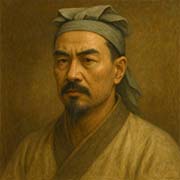
Sun TzuAncient Chinese general and strategist to whom the book "The Art of War" is attributed.
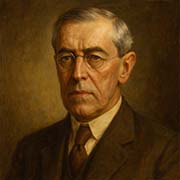
Woodrow WilsonThe 28th US president (1913-1921), who led the country in the First World War and proposed the League of Nations.
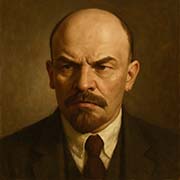
Vladimir LeninLeader of the Bolshevik revolution of 1917 and founder of the Soviet state.
A myth about the Grandmaster
"The Grandmaster is a cold strategist who has no use for feelings or people."That's the popular version.
It comes from the first impression. The Grandmaster is polite with everyone, keeps a calm face and lets people close slowly. That reserve is how a structured mind works, and good manners are a way of treating everybody alike.
Underneath, warmth matters a great deal. They gladly take in a lively mood and open affection, miss both when they're gone, and can't conjure them up alone. Next to someone cheerful and open, the reserve melts and the wit comes out.
Feelings gather quietly, and the people around the Grandmaster rarely see them. Reserve isn't the absence of feeling here, only the way it's carried.
Frequently asked questions about the Grandmaster
On this site the type is the Grandmaster. In MBTI the same type is INTJ, nicknamed the Architect. In socionics it goes by Robespierre (LII), and in Jung's own line it's written Ti-Ne. All of these systems grew out of Jung's research, so they're different names for one and the same type.
Not in its core. Different tests, taken at different times, measure in different ways, so their results can vary. A type read from an adult's speech doesn't change. Behavior, habits and skills do change with age and experience, and that's normal, while the way thinking is built stays the same.
Their mind splits everything into parts and links on its own, so a contradiction stands out and gets in the way. A clear rule calms them, because everyone knows what to expect and where they stand. A broken one makes them ask why it happened, since the reason shows whether it will happen again.
A commanding tone usually meets resistance, but a sudden push can leave them speechless, since open pressure isn't something they use themselves. They answer with an argument, a rule or a question, or they step back, and writing it down often helps. On principles and boundaries they hold firm. Someone nearby who takes the push on makes things easier.
The feelings are there, though they're rarely visible, and warmth comes out through deeds: attention, gifts, help and care. Tender words come harder, and they seldom speak first. Warmth without pressure, a light tone and room not to explain right away all help. In a small circle they loosen up and can turn talkative and witty.
Next steps
Two things can help from here, and they answer different questions. One settles whether this is your type. The other goes deeper into the Grandmaster's inner life and relationships. Which one you need depends on your question: whether this is you, or what to do now that you know.
The doubt won't go away on its own. A type assessment from your speech settles it
You can reread the page, you can take five more tests, and the doubt will still be there. Start with our free ten-minute test. If you still have doubts after that, a type assessment from your speech settles the question. For good.
The books pick up where this page leaves off. The Premium Profile ($10) covers the Grandmaster in 11 chapters, from what drives them to work, money, closeness and growth. Master Relationships ($30) is two books: "A Relationship Guide to the 16 CoreTypes" and "A Field Guide to the 16 Types".