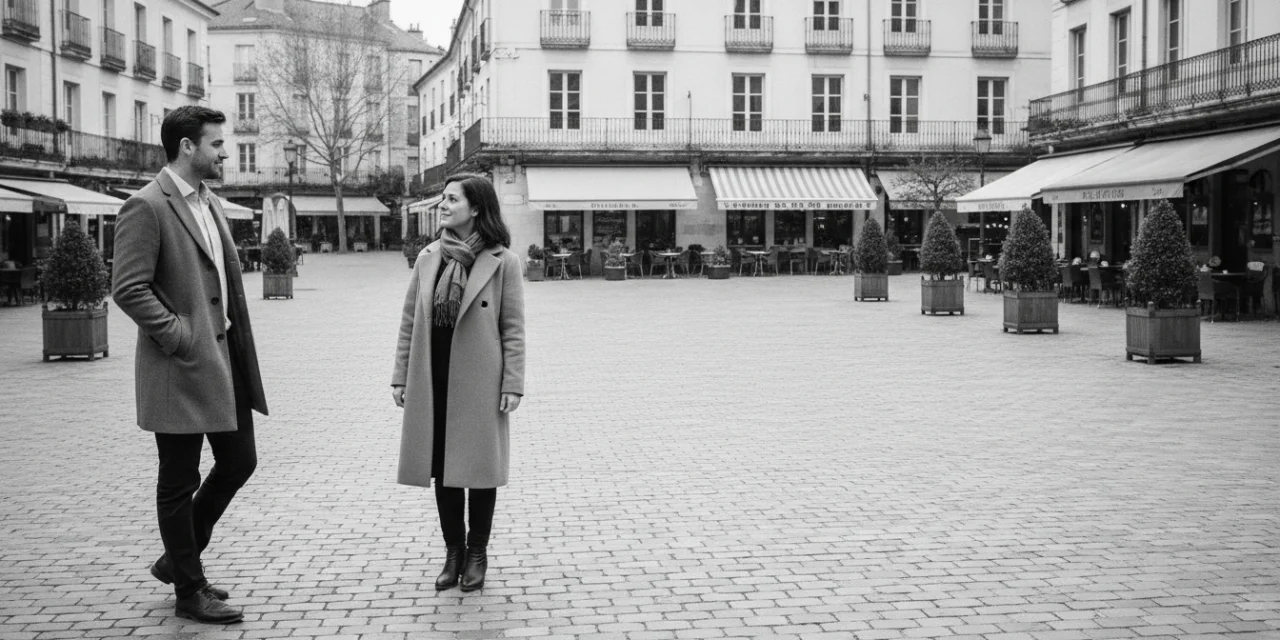
Super-ego relations are relations of long-range respect: from a distance the partners sincerely admire each other, and on getting closer they begin, without meaning to, to strike each other’s most vulnerable spots. Of the 14 kinds of relations between the 16 types in the CoreTypes system, this pair is one of the most deceptive: the start promises much, the continuation regularly wounds, and nobody is to blame.
The plot is recognizable. “I always admired him, until we started living together.” Or: “A wonderful person, but after every heart-to-heart I somehow feel worse.” If that sounds like someone close to you, read to the end.
To check the guess against the table of pairs, you’ll need your own type. The free CoreTypes test determines it in minutes.
What Are Super-Ego Relations
The partners in this pair belong to opposite value quartets: what is sacred to one is secondary to the other, and back. Their temperament, meanwhile, matches: both rationals or both irrationals, both extraverts or both introverts. Outward similarity of rhythm plus deep opposition of values: a ready-made paradox. The quartets are covered in the 16 CoreTypes theory.
The name nods to psychology: the super-ego is the agency of “how one ought to be,” the inner image of a correct self. The mechanics of the relation are exactly that: the partner’s strengths land in your zone of “what I try to appear to be.” They do with ease what you do with effort and for show. From afar this earns respect, almost envy with a plus sign: “I wish I could do that.”
The problem waits lower, in the vulnerable zone. More on it now.
The Mechanism: From Admiration to Jabs
Take the Harmonist (ISFP, known in socionics as Dumas) and the Seer (INTP, Balzac in socionics). From a distance they are charmed by each other. The Harmonist sees a man who calmly calculates the future and fears nothing ahead of time, which is exactly what the Harmonist tries to look like when worrying about tomorrow. The Seer sees a person whose warm, cozy life happens all by itself, the very thing he stages on holidays, by manual. Mutual “I wish I could” is guaranteed: each one’s Leading function lands in the other’s role zone, the area of diligent norm.
Now the closeness. Every type has not only strengths but a Vulnerable function: the psyche’s sorest point, where any touch feels like a blow, even a friendly one. The trouble: the Creative function of each of these two lands exactly on the other’s Vulnerable function. The Seer, solving problems, habitually wields Practical Logic: profitable, unprofitable, efficient, pointless. For the Harmonist, that register of usefulness and businesslike efficiency is precisely the sore spot, and every “what was the point of that” sounds like a verdict. The same flies back: the Harmonist creates atmosphere and mood spontaneously, in waves, and for the Seer that unstructured emotional element hits his weak place, stirring a dull urge to lock himself in the study.
Nobody is aiming. That is the tragicomedy of Super-ego: the partners wound each other simply by acting naturally. The closer the distance, the more often one’s natural behavior lands on the other’s sore spot.
The Eight Super-Ego Pairs
| Pair | From Afar, and Up Close |
|---|---|
| Grandmaster (INTJ, Robespierre) and Custodian (ISFJ, Dreiser) | Reason respects loyalty, loyalty respects reason; up close, logic wounds feelings and moral scorekeeping wounds logic. |
| Beacon (ESFJ, Hugo) and Executor (ENTJ, Jack London) | Celebration and enterprise admire each other across the hall, and wear each other out at one table. |
| Catalyst (ENTP, Don Quixote) and Duke (ESFP, Napoleon) | Each covets the other’s ease; up close, an eternal contest for attention and first place. |
| Harmonist and Seer | Comfort and forecast: an idyll from afar; up close, calculation smothers warmth and the element of feeling smothers thought. |
| Flamekeeper (INFP, Yesenin) and Craftsman (ISTP, Gabin) | Lyric and craft: admiration in absentia; up close, each is mute in what matters most to the other. |
| Warlord (ESTP, Zhukov) and Harbinger (ENFP, Huxley) | Force envies lightness, lightness envies force; side by side they step on each other’s sorest spots. |
| Herald (ENFJ, Hamlet) and Overseer (ESTJ, Stierlitz) | Inspiration and order: allies on stage, reproach for reproach at home. |
| Sentinel (ISTJ, Maxim Gorky) and Sage (INFJ, Dostoevsky) | Regulations and conscience respect each other’s principles, and suffer from their application. |
All eight pairs share one gradient: the greater the distance, the better the relations.
What It Feels Like From Inside
Phase one: interest in absentia. A Super-ego partner attracts as an image: from afar they look like someone who has achieved what you keep working on. The acquaintance is usually pleasant, with a note of mutual deference: both try hard, as at a job interview.
Phase two: strange conversations. On closer contact, talking turns out interesting yet heavy: the other keeps steering into topics where you’re awkward, while your most innocent remarks visibly sting them. The exchange feels like talking through a bad interpreter: meanings arrive, intonations don’t. Each waits for a response to what they value, and receives polite incomprehension.
How it looks in a family is shown by the Beacon and the Executor. She meets him after work with a hot dinner and coaxing: eat properly, rest, you’re running yourself down. To her, care for the bodily comfort of loved ones is sacred. To him it is an invasion: custody of his daily routine lands in his most vulnerable spot, and he snaps without understanding why. In the evening he lays out a three-year plan before her: the mortgage closes by May, then the expansion, vacation in September. To him this is care. To her it is choking dread: long horizons and a scheduled future press on her sore point, and she changes the subject, which stings him in turn. Both are trying for each other. Both keep hitting each other.
Phase three, if the pair keeps closing in: an exchange of jabs. Not quarrels even, but a background mutual soreness: he said “that’s illogical” again, she made a scene again, he calculated everything without a soul again, she demands the impossible again. Both tire, neither understands what’s happening: separately each is a fine person, together there’s a constant low ache. Super-ego pairs often live in cycles: draw close, get burned, retreat to a safe distance, get bored, draw close again.
The other thing matters too: at the right distance all of this disappears, leaving pure respect. Colleagues from different departments, friends who meet occasionally, mutually respectful professionals: in these formats Super-ego looks like a model relation. The whole secret is in the yardage.
The Myth: “Opposites Attract, So We’re Meant for Each Other”
The myth: if someone is my opposite and I’m drawn to them, it’s fate; polarities complete each other.
The attraction of opposites is real, but opposites come in kinds. A dual is opposite to you in a way that makes their strength cover your weakness: the constructions dock. A Super-ego partner is opposite differently: their strength strikes your weakness, and their values cancel yours. The pull is real and strong, a pull toward an image, toward the “correct self” the partner seems to embody. But you will live not with the image, with the live person whose natural behavior wounds you.
Telling these two kinds of attraction apart is perhaps the most practical skill that knowing types gives. It starts with an exact understanding of your own construction: where your real strengths are, where the vulnerability that needs guarding. That is what the expert personality profile is about: a detailed book on your type.
What Helps in Super-Ego Relations
First and main: distance is a solution, not a defeat. Super-ego relations aren’t repaired by getting closer; they are repaired by the right spacing. Rarer, shorter, more formal, and the person becomes what they were at the start: respected and interesting.
Second: frames and protocol. If distance can’t be chosen (shared family, shared project), formalization saves the pair: clear roles, divided zones, agreements instead of spontaneity. The less spontaneous the contact, the fewer accidental hits on sore spots.
Third: a map of the minefields. One honest conversation, “which of my phrases short-circuit you, and which of yours me?”, gives what intuition won’t: a list of no-go zones. Super-ego partners don’t feel each other’s sore spots (that’s the trouble), but they are perfectly capable of learning them as a list.
Fourth: don’t heal each other. The temptation of these relations is to “help” the partner become more correct: they’re so clearly trying to be like me! They aren’t. Their norm is not your program, and back. Respect without missionary work is the ceiling of these relations, and it’s a decent ceiling. How your type combines with each of the others is covered in the relationship books for your type.
How to Recognize a Super-Ego Partner
The indirect clue is the contrast of image and closeness: someone you admired from afar and tire of up close. But the same pattern occurs in quasi-identity and extinguishment; by eye they can’t be separated. The one reliable path is determining both types.
Step one, the free test: it analyzes which wordings you choose and gives a first hypothesis. Step two, for full certainty, the recorded interview: 40 to 60 minutes of your reflections, an expert semantic analysis of your speech, a type with accuracy close to one hundred percent. Values can’t be hidden in speech: they sound in every choice of word.
Frequently Asked Questions About Super-Ego Relations
Is a happy Super-ego marriage possible?
Possible, in mature couples who found the formula of “closeness by schedule”: separate studies, autonomous zones of life, care around the sensitive topics. It is a marriage that demands awareness: on autopilot it slides into an exchange of jabs. Knowing the types here isn’t a luxury; it’s safety equipment.
Why do I feel bad after talking to him, when he said nothing wrong?
Because his natural manner, the strength of his type, lands in your vulnerable zone. No malice, real damage. Grounds not for accusations but for distance, or a direct request: “gentler on this topic, please.”
Is Super-ego the same as conflict relations?
No. Conflict is a separate, heavier kind: there the vulnerability is struck by the partner’s main strength, constantly. In Super-ego the hits come from the working tool and alternate with sincere respect. Roughly: conflict is constant pain up close, Super-ego is intermittent.
Why am I drawn to a person I feel bad with?
Because the pull isn’t toward the person but toward the image: they embody, without effort, what you try to be. The pull is real and strong, but it’s about your norm, not about compatibility. A useful reframe: not “I want to be with them” but “I want to be able to do what they do.” The second, notably, is achievable without a shared household.
Who is my type’s Super-ego partner?
All eight pairs are in the table above. The landmark: a person of your temperament from the “other” value camp whom you admire at a distance.
Instead of a Conclusion
A Super-ego partner is a mirror of your efforts: they live what you rehearse. Keep them at the distance of respect and they will inspire you for years; pull them point-blank and a mutual bullfight begins with no malice in it. To know which distance works with whom, start with coordinates: the free CoreTypes test gives a first hypothesis about your type, the recorded interview confirms it with accuracy close to one hundred percent. Respect is also a form of closeness. It just has a different yardage.