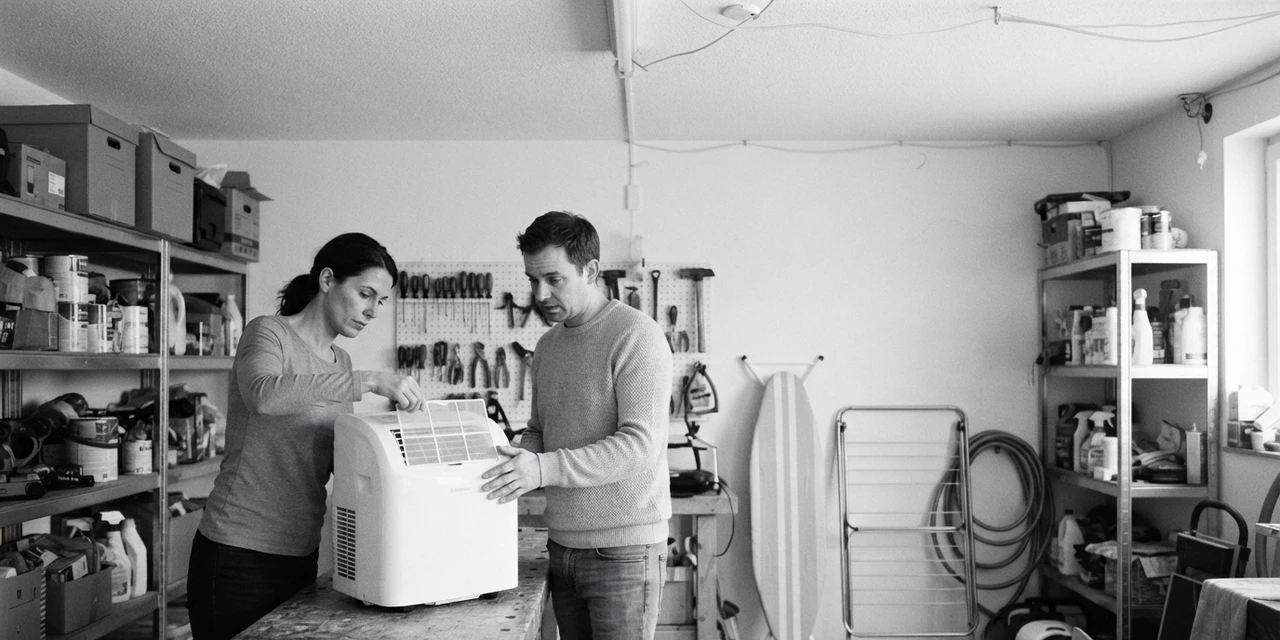
Custodian (ISFJ, known in socionics as Dreiser) and Craftsman (ISTP, known in socionics as Gabin) form Request relations, and they’re compatible in a lopsided way: the practical help travels mostly one way, from the Craftsman to the Custodian. The Craftsman shows how a thing is done, the Custodian watches, repeats it and waits for a grade, and the pair does well when the two settle the hours between them and the Custodian asks for favors warmly.
The Craftsman is the Benefactor in this relation and the Custodian is the Beneficiary. The Beneficiary’s seat is a full one: the Craftsman’s strongest tools hit the places where the Custodian wants a hand, while the Custodian holds what the Craftsman is short of, a kept word, a laid table, a plain yes or no.
A lot in this pair comes down to two small things, an hour named out loud and a shelf that gets finished on the second visit. Everything below rests on two types, yours and your partner’s. If you only know yours roughly, the free CoreTypes test gives you a working version in about ten minutes: it looks at how you phrase things, not what you believe about yourself.
ISFJ and ISTP at a glance
| Custodian | Craftsman | |
|---|---|---|
| Type page | Custodian (ISFJ, Dreiser) | Craftsman (ISTP, Gabin) |
| Leading function | Relational Ethics | Experiential Sensing |
| Creative function | Volitional Sensing | Practical Logic |
The relation is Request, with the Craftsman as Benefactor and the Custodian as Beneficiary. Sphere by sphere:
- As a couple: warm and workable once the hours are agreed in advance.
- Friendship: gentler, with no schedule to break.
- Work: the Craftsman’s shortcuts help with tools and repairs and help less with paperwork the Custodian has to keep to the letter.
ISFJ vs ISTP: How Different Are These Two?
Both are quiet, home-loving Sensing types, and they share two letters of four, I and S. The Custodian talks about the word given, duty and how something was said; the Craftsman talks about the object, how it’s built and how long it takes, and says less about people. For the Custodian a promise is close to a contract, while for the Craftsman “I’ll tell you” is a plan for today. In a quarrel the Custodian lists grievances and waits for an explanation, while the Craftsman jokes or leaves on an errand.
How Request Relations Work Between ISFJ and ISTP
In Request relations the order runs from one side to the other. Here it runs from the Craftsman to the Custodian and lands twice: the Craftsman’s leading Experiential Sensing meets the Custodian’s demonstrative Experiential Sensing, and the Craftsman’s creative Practical Logic meets the Custodian’s suggestive Practical Logic. Two strong functions fall on two soft spots, which is what makes the Custodian an apprentice.
Experiential Sensing is the feel for how a thing should sit, hold and work. The Craftsman teaches it by showing and explains while the hands move. The Custodian keeps a home in order with the same function in its demonstrative slot, casually and without a sense of its worth, so the Craftsman’s words are caught literally and “like this?” comes with a hope of a grade. The Craftsman grades a little above the work, and the Custodian feels indebted. The other half is less pleasant: the Craftsman’s main strength doesn’t register as a gift, since comfort and know-how seem already there, so the thanks come out short.
Hannah (a Custodian) has a dripping tap, and Joel (a Craftsman) comes by with a wrench. He talks as he works: the washer is worn through, tighten it without leaning. Hannah repeats the order aloud and writes it down. “Why this way round?” she asks. “Watch, like this,” he says. A week later her neighbor’s tap drips, and Hannah changes the washer herself and goes to report. Joel nods; he doesn’t seem to remember giving the lesson.
Practical Logic is the “how do I get this done” function. The Custodian’s suggestive slot is where an answer doesn’t turn up alone, so the Craftsman’s way is taken gladly. The Craftsman gives in portions: two shelves go up, the screws for the third are missing, “the rest another time”, and a pencil line marks the wall for months. The other half shows when the Custodian asks about a work matter: the Craftsman answers by their own measure, quick and around the rules, and the Custodian finds it doesn’t fit the regulations.
Time is the knot that does the most damage. The Craftsman’s role function is Temporal Intuition, held loosely: “a couple of minutes”, “soon”. The Custodian’s mobilizing Temporal Intuition switches on with firm hours and promises and stalls without them, so “wait for me” binds and a broken hour reads as “my word means nothing to you”. The Craftsman hears “are you here all evening?” as a condition and sidesteps it, so the Craftsman sets the time. Each also tries to pull the other onto their own system: the Custodian cuts the evening into points, the Craftsman wants it without a clock.
Daniel (a Custodian) lays the table for two. “Are you here for the whole evening?” he asks. “Just a couple of minutes,” says Rosa (a Craftsman), already at the door. “I’m going to straighten the antenna for the guys downstairs.” Daniel waits with the kitchen clock in view. Rosa gets back after sunrise. The dinner goes into the fridge, and at breakfast Daniel says nothing about it.
The ISFJ Is the Beneficiary Here: What That Means
The Custodian gets a working answer, a skill, the sense that things are fixed and will hold, and pays in waiting, unfinished jobs and a grade by someone else’s measure. When Joel says “you pick things up fast, let’s move on”, Hannah hears a verdict on the whole course.
The role has weight of its own, because the lessons land on the Custodian’s soft spots and the Custodian holds what the Craftsman lacks. The Custodian’s leading Relational Ethics lands on the Craftsman’s mobilizing Relational Ethics, which wakes to warmth and answers with presence and favors; a moral ledger or an interrogation switches it off. A kept word, a clear yes and no, a table, patience: that’s what the Custodian pays with, and a warm, mild request is the one thing that moves the Craftsman.
Sooner or later the pupil starts checking the teacher. The Craftsman’s demonstrative Structural Logic comes with a confident tone and no hurry to verify. The Custodian’s role function is the same Structural Logic: it wants to look reasoned and loses the thread in an argument, so the Custodian leaves an argument with “I’ll check” and later finds the Craftsman was imprecise.
Elena (a Custodian) gets a new dishwasher, and her friend Tomas (a Craftsman) tells her how to hook it up. She opens the manual and finds it says something else. “The manual says it goes differently,” she tells him. “It works anyway,” he says. She connects it by the manual, and from then on asks him about the house less.
How the Custodian sees the Craftsman
The Custodian sees skilled hands, calm and help that arrives unasked. A favor looks like care, a missed hour looks like disrespect, an even face looks like coldness, and in the mirror the Custodian sees someone too serious.
One evening Joel turns up without calling, a screwdriver in his pocket; passing by, he noticed a rattle in Hannah’s cupboard door. He fixes it in silence, drinks his tea and goes. Hannah takes the visit as a serious sign: he came, so he cares. A month on she says, “You promised to come for the weekend.” “I did? When?”
Fixing things with the hands is the Craftsman’s language of closeness, and a question about hours sounds like a condition. Emotions are a thin channel on both sides. The Custodian’s ignoring Ethics of Emotions checks other people’s feelings for sincerity and sets no warm background of its own, and the Craftsman’s vulnerable Ethics of Emotions hides behind a level face, a joke or silence and finds apologizing hard. So the Custodian reads the level face as cold or mocking and demands an explanation, and the Craftsman closes up tighter.
Daniel hasn’t heard from Rosa for two days. “Explain to me what that was,” he says. Rosa says nothing, a half-smile, her eyes on the window. Daniel takes the smile for mockery and asks again, harder. Rosa gets up: she has to pick her niece up from class, and the question hangs in the kitchen.
ISFJ and ISTP Day to Day: Seven Telltale Signs
- The Craftsman, a guest in your kitchen, reaches for the squeaking cupboard door without asking.
- Home repairs come in two visits, so the wall holds two shelves and a pencil line for the third.
- “How long are you staying?” gets “we’ll see” or “just a couple of minutes”.
- The Custodian keeps an evening free “just in case”, though nothing was promised.
- A three-paragraph message gets back a photo of a repaired thing, or “ok”.
- “Let’s go with no plan” sends the Custodian off to pack a rucksack for three scenarios, with a first-aid kit.
- After the Craftsman leaves there’s one cup in the sink and an open box of screws on the table, which the Custodian washes and closes.
Over tea at Daniel’s, Rosa explains how to brew it: water just off the boil, three minutes, and why the kettle clicks. Daniel nods. A week later he serves the tea exactly as told and asks, “Like this?” “Just like that,” Rosa says, pleased, having forgotten she showed him.
ISFJ and ISTP Compatibility in Love and Everyday Life
The Custodian is drawn to skill, calm and the feeling that this person will sort it out. The Craftsman is drawn to a warm home, taste, order, attention without pressure and a clear word. The Custodian’s pull is stronger early, while the answer to “how do I do this” is still needed.
The routine is teacher and pupil, with supper in thanks for a lesson. The Custodian talks about the future, and the Craftsman says “we’ll see”. Tone decides a lot: the Custodian’s leading Relational Ethics meets the Craftsman’s mobilizing Relational Ethics, so a warm request moves the Craftsman and a list of grievances switches it off. One evening Elena meets Tomas with her grievances in order; he smiles, says nothing and leaves after ten minutes. The next evening she says, “Glad you came, the cupboard door is stuck,” and Tomas takes off his jacket and stays until night, finishing yesterday’s job. Elena puts the list of grievances in a drawer.
Ideas are where neither covers the other. The Craftsman’s suggestive Intuition of Possibilities wants fresh options from the partner, a variant or an unexpected turn. The Custodian’s vulnerable Intuition of Possibilities spots risks and prohibitions and can’t produce variants, so the Craftsman calls that boring and the Custodian feels like a brake. “Let’s drive out on Saturday, wherever,” Tomas says. “Where to, and what time are we back?” Elena asks. “That’s exactly why,” he says. They go, and Elena spends the road counting stops, water and the way home. The second time she says no, and Tomas goes alone.
Closeness runs through the word and the commitment for the Custodian, through presence and hands for the Craftsman, and warm words are few on both sides. A quarrel stays a quarrel: a list of points and “explain” on one side, a smile, silence or an errand on the other.
Daniel reads in an armchair while Rosa takes a motor apart under a lamp. An hour passes without a word. Daniel counts the evening as close and wants to seal it with words: “It’s good that you’re here.” “Yeah,” Rosa says without looking up. “Hold this.” He holds the part, smiles, and takes it as a yes.
ISFJ and ISTP Friendship
Friendship is gentler than the couple version, because nobody owes anybody an hour. The Craftsman drops by when passing, the Custodian feeds and receives, and the clash over the clock loses most of its bite. What works is a set of terms that are clear, mutual and voluntary. Words of feeling stay rare: the Craftsman’s reply tends to be an object or a photo, and the Custodian learns to read that as an answer.
Samir (a Custodian) writes a long message to Bea (a Craftsman) about a bad day. Two days later she sends back a photo of a repaired alarm clock and one word, “here”. He’s hurt at first, then reads the photo as an answer. He tells her, “Come by whenever you like, and if you decide on a day, text me the evening before.” “Fine,” she says. She texts the night before, visit after visit, and for the first time Samir gets a warning before someone arrives.
Weak points and what the Custodian can do
The Custodian waits by the clock, reads a level face as contempt, answers an idea with a rule and no alternative, and checks the teacher in silence while the complaints pile up. The Craftsman pays too, without any fault: deadlines and explanations of feelings aren’t the Craftsman’s language, frames feel like squeezing, and a moral ledger comes with no words to answer it. Asked why he didn’t call on Tuesday, Tomas remembers rewiring a neighbor’s lamp, a good day with nothing to say about it, and smiles.
The Custodian’s creative Volitional Sensing is the very function the Craftsman’s ignoring slot filters out as noise. Firmness, ultimatums and a harder tone don’t reach, so the Custodian tightens further and the Craftsman drifts away. A mild, persistent request that comes half as a hint does reach, because the Craftsman’s mobilizing Relational Ethics answers to the warm form. A calm decision to step back, made without pressure, also lands.
On Joel’s third cancellation in a row Hannah says firmly, “Seven this time, or the conversation will be different.” Joel gives a calm look, nods and turns to the hallway lamp. Nothing changes. Weeks later she tries again: “I’d feel easier if you named an hour. Does nine suit you?” “Nine,” he says. He arrives at 9:20, but half an hour earlier he texts “running late”, and Hannah counts twenty minutes as a win.
When a pause is the honest answer
The relation tends to run in phases: the Craftsman arrives with a job in hand, then asks for a bold idea, then friction over hours sets in, and then the pupil begins to check the teacher and the roles crack. Later the Craftsman often tries to hold on, while the Custodian slides toward a quiet decision. If the waiting repeats for many weeks with no anchor, the advice doesn’t work and there are no words on the other side, a pause or a move to friendship with dates is a fair answer, without a loud finale.
After another dropped evening Daniel says calmly to Rosa, “Let’s take a pause, no meetings. I’ll call you.” “Okay,” Rosa says, easily. Four months of silence follow, and then Rosa asks him to help put up a shelf at a friend’s. They meet like acquaintances, without the old expectations.
At work
The Craftsman’s “how to do it” advice reaches the Custodian as one option among several, and the Custodian checks it against the regulations before acting. Handed a plan to skip two approvals in her department’s paperwork, Elena thanks Tomas, keeps to the procedure and asks him about her shelves instead. For tools and small repairs she consults him calmly and takes the shortcut gladly.
Say this instead
Each pair is the Custodian speaking: the first line hits a sore spot, the second works.
- Hits the Craftsman’s role Temporal Intuition: “Are you here all evening? Tell me now.” Works better: “I’m here until eight. If it doesn’t work out, just text me and I’ll get on with my own things.”
- Hits the Craftsman’s vulnerable Ethics of Emotions: “Explain your behavior: why didn’t you call?” Works better: “I was anxious without a call. Text me once if you’re running late.”
- Hits the Craftsman’s suggestive Intuition of Possibilities: “That breaks the rules, so no.” Works better: “Let’s do a version that fits the rules, I’m in. What else do you have in mind?”
The myth: “In Request relations the Beneficiary only takes and suffers, and the pair is doomed”
The Beneficiary only takes and suffers, the Benefactor only profits, and the pair is doomed from the start. In fact the exchange runs in two currencies: the Craftsman pays in hands and in the answer to “how do I do this”, the Custodian in the kept word, the house, clarity and patience. A mild request moves the Craftsman, and the friction comes from hours and words, which can be agreed on. Exit is a phase and a tendency, not a verdict: part of these pairs rebuild themselves into friendship with dates, and others stay in the early phases for years.
Joel falls ill. Hannah brings broth, tidies his kitchen and sits up until morning. A month later her radiator springs a leak in the night, and Joel arrives, fixes it without a comment and stays until dawn. Each paid in their own currency, and nobody kept a count.
The hours, the half-finished shelf and the quiet exit all have more to them than one article can show. What fits into a handful of scenes here gets a much fuller treatment in the book on your type’s relationships — this pair in depth, plus all the others: how your type gets on with each of the sixteen, its own included. It covers not just how each of these pairs works, but what to do about it.
Frequently Asked Questions About ISFJ and ISTP
Are ISFJ and ISTP compatible?
Yes, in an asymmetric way. The Custodian gets practical know-how, like Hannah’s tap lesson, and pays in waiting, like Daniel’s dinner that went into the fridge. How heavy that feels depends on anchors for time and a mild way of asking: Hannah’s “Does nine suit you?” cut a cancelled evening down to a twenty-minute delay.
What does it mean to be the Beneficiary in Request relations with an ISTP?
It means being the pupil on request: the Custodian takes the skill and the answer to “how do I do this”, and pays in waiting and in being graded. Elena’s lessons thinned out the day the manual disagreed with Tomas.
Can ISFJ and ISTP be friends, or only this one-sided dynamic?
They can, and friendship tends to go easier, because it has no clock to break. It needs clear terms: Samir’s “text me the evening before” gave Bea a rule she could keep.
What are ISFJ and ISTP like in a romantic relationship?
The Custodian seals closeness with words, the Craftsman with presence and hands, and warm words are few on both sides. Daniel’s “It’s good that you’re here” got “Yeah. Hold this.” in reply, and he held the part and took it as a yes.
ISFJ woman and ISTP man: does gender change the dynamic?
The dynamic comes from the functions, and it tends to look much the same with the genders swapped. Ruth (a Custodian) and Ben (a Craftsman) have a washing machine that won’t drain. Ben explains how to clean the filter and Ruth writes it down. “When exactly can you come?” she asks. “This week, I’ll tell you,” he says. Thursday passes with no Ben, and on Sunday he finds the filter already cleaned by her notes and tea on the table.
Where to go from here
Whether you recognized yourself in the Custodian’s waiting or in the Craftsman’s quick errands, that recognition is only a starting point. One thing left: making sure the type you have is the right one. That’s what professional typing is for: a specialist reads your type from your actual speech, in a recording you make at your own pace or in a live conversation, whichever you prefer. Choose whichever format feels right; either one gets you to the same place: a type you no longer have to doubt.