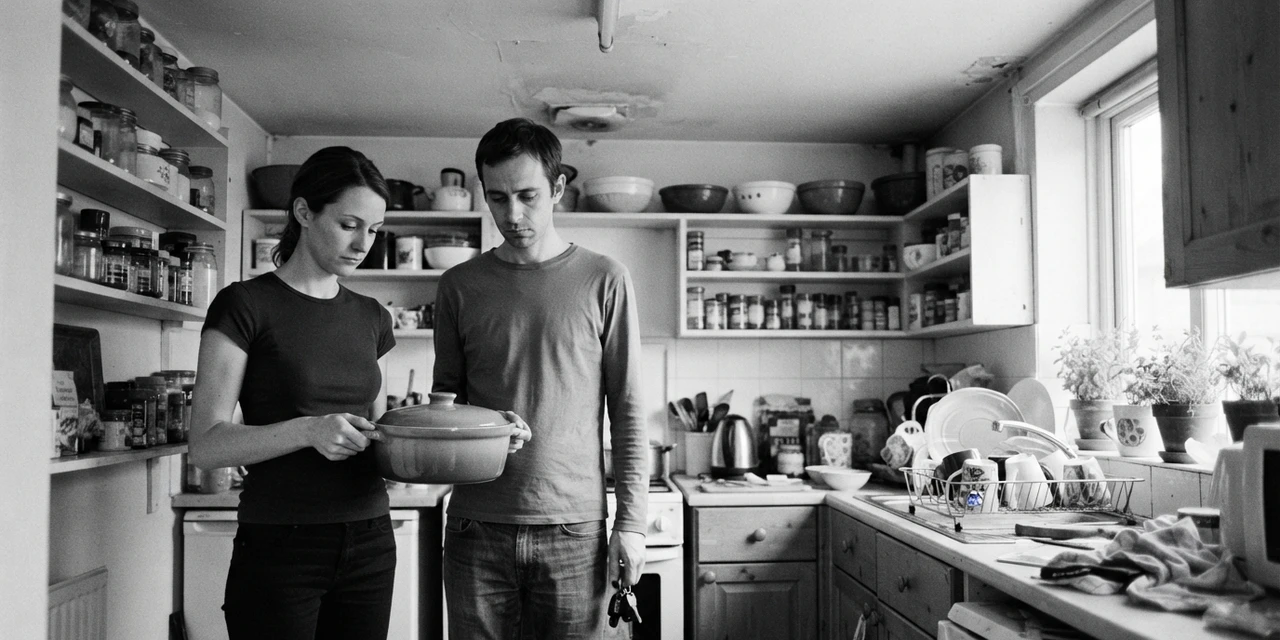
Harmonist (ISFP, known in socionics as Dumas) and Herald (ENFJ, known in socionics as Hamlet) form Revision relations, a directional kind in which the Harmonist is the Supervisor and the Herald is the Supervisee. The two are compatible in the way that matters for a couple: the pull is real and quick, but the pressure runs one way, from the Harmonist’s care to the Herald’s most defenseless spot, so how well it works depends on how that care is delivered and how much room they keep.
A plate of food or a comment about a jacket can be ordinary kindness from one of them and a bruise for the other. Everything below rests on two types, yours and your partner’s. If you only know yours roughly, the free CoreTypes test gives you a working version in about ten minutes: it looks at how you phrase things, not what you believe about yourself.
ISFP and ENFJ at a Glance
| Profile | Harmonist | Herald |
|---|---|---|
| Type page | Harmonist (ISFP, Dumas) | Herald (ENFJ, Hamlet) |
| Leading function | Experiential Sensing | Ethics of Emotions |
| Creative function | Ethics of Emotions | Temporal Intuition |
- Relation: Revision relations, directional: Supervisor and Supervisee.
- Couple: a fast, warm start, then friction at home over food, clothes, time and guests.
- Friendship: good on a schedule and outside the home.
- Work: workable with written tasks and fixed hours.
ISFP vs ENFJ: How Far Apart These Two Really Are
Three of four letters differ: introvert and extravert, sensing and intuition, perceiving and judging. Only Feeling is shared. The Harmonist lives close, now and thickly: taste, warmth, the softness of the light, and a direct clash tends to get dodged by going to the kitchen. The Herald lives by meaning and direction, by “where is this going.” Speech runs hot and evaluative, plans span years, and the Herald’s own space is cool, roomy and sparse. What they share is speed at reading the mood of a room, and the first spark usually comes from that.
How Revision Relations Work Between ISFP and ENFJ
In Revision relations one side presses and the other absorbs, and the roles don’t swap. The Harmonist’s Leading function, Experiential Sensing, is a radar for the body and the home: warmth, hunger, a pale face, how a jacket sits, what’s on the table. The Herald’s Vulnerable function is the same Experiential Sensing, and that’s the one spot with no armor. The Herald keeps its own life cool, roomy and plainly fed, with hardly any words for the body or taste. An offered plate, a remark about color or a “how are you feeling?” lands where there’s no way to answer back, while from the Harmonist’s seat it looks like plain attention to how a person is doing.
Marta, a Harmonist, brings Daniel, a Herald, a container of homemade ravioli. “You look pale. Eat something.” “I just had lunch.” “Just a little.” He eats it and says thanks. Two weeks later it’s the same, then again. Marta carries the same containers to her sister and her neighbor, and to her it’s simply how you look after people. Within a month Daniel starts leaving the apartment before she arrives, “errands.” She decides he’s overworked and cooks more.
The second contact point is shared emotional language. The Herald’s Leading function and the Harmonist’s Creative function are both Ethics of Emotions, so both read the mood of a room fast, and the first evenings run late. The moves differ: the Herald builds pressure and evaluation, the Harmonist tunes the mood by joking or changing the subject. With its Leading function already dented, the Herald answers at less than full strength, and on the Harmonist’s ground, the home and the mood of the evening, the Harmonist wins.
As a tendency and a phase: closeness comes quickly, then the Harmonist starts “improving” food, clothes and routine while the Herald goes monosyllabic. The Herald answers with doubt and a sharp line of its own, the pressure drops for a while, and then the Herald dives into a big outside project. What stays is an echo: the Harmonist’s voice about taste and food in the Herald’s head, and the Harmonist’s habit of looking after the Herald from afar. None of this describes a whole person, only where two ways of processing the world collide.
The ISFP Is the Supervisor Here: What That Means
The Harmonist carries a picture of how good life looks: eating properly, sleeping enough, dressing comfortably, a warm house, no fights, and shares it through friendly corrections about the body, food, looks and routine. The effect on the other side tends to go unregistered; what registers is that the Herald seems heavy, and tiredness gets the blame.
Owen, a Harmonist, notices that Priya, a Herald, has gone quiet: she eats less, leaves early, her face looks gray. “Are you ill? Tired?” A blanket, tea, then “maybe see a doctor.” The quieter she gets, the more he adds, because the blanket is what he’d want in her place. Priya calls less often, and Owen tells his friends, “I’m only trying to help, I don’t get it.”
The same mismatch shows in a quarrel. The Herald’s Mobilizing function, Volitional Sensing, wants momentum and a worthy opponent. The Harmonist’s Ignoring function is the same Volitional Sensing: the strength exists but stays in reserve, and fear of a flare-up makes the Harmonist damp the temperature on the first note. Priya’s voice rises a little. “Calm down, let’s have some tea,” Owen says. “I am calm.” “I can see you’re not.” “Don’t tell me to calm down.” She blows up at that one word. “I only offered tea.”
The Supervisor pays too: holding a home’s mood together is tiring, and quarrels leave headaches.
How the Harmonist Sees the Herald
The Harmonist sees a gray face, clothes that don’t suit, a skipped lunch, and finds loud talk about struggle and the future frightening. What stays out of view: a remark about the body, food or looks hits the one place the Herald can’t defend, so tightness and silence get read as tiredness, a refused plate as ingratitude, and the lack of words for sensations as secretiveness. Persistence is invisible too: “I only asked.” The remedy is the usual kit: a lighter mood, a hearty table, rest, a doctor.
Behind this reading sits a belief tied to the Harmonist’s Role function, Temporal Intuition. Time runs by the near and the felt, forecasts for the next few days turn gloomy, and dark words are thought to attract trouble. The Herald’s Creative function is the same Temporal Intuition, a view of years ahead, and a worst case gets said out loud as a planning fact.
Ravi, a Herald, says over dinner that the project could be shut down and they should prepare. Lena, a Harmonist, grabs the table edge. “Don’t say that, you’ll jinx it!” and then straight to the soup and the weather. “I’m talking about a deadline.” “Let’s have some tea.” Two months later the project closes, Lena hears last, and she’s more frightened than if she’d heard it in advance.
ISFP and ENFJ Day to Day: Seven Telltale Signs
- “Did you eat?” replaces “hi,” and a sandwich goes into the Herald’s hand; the Herald eats it in silence and lunches elsewhere the next day.
- At the door: “You’re wearing that? The color’s not yours.” The Herald changes the shirt or goes as is, with a stone face.
- “Just for a minute” turns into dinner while the spreadsheet due in the morning waits in the next room.
- A sweater arrives “just because,” and a week later the Herald returns a present twice the size.
- The Herald shares good news, the Harmonist is thrilled, asks a dozen questions, then adds “the hall’s small, though.” Next time the Herald announces the news before anyone asks.
- The Harmonist dims the ceiling light and lights candles; the Herald opens a window and switches on a desk lamp.
- Ten guests in a twelve-square-meter room: the Herald steps onto the stairs “for five minutes” and comes back after forty.
ISFP and ENFJ Compatibility in Love and Everyday Life
The attraction is real, and it starts at a party. Elena, a Herald, is in full flight about the future of the neighborhood. Jonas, a Harmonist, listens by the wall, then steps over: “You must be freezing. Let me get you something hot.” Three weeks later he brings soup, and she says, “Bring more.” The shared Ethics of Emotions gives them a language, and the Harmonist’s Suggestive function, Intuition of Possibilities, spots its own openings poorly and hungers for prospects. The Herald’s Demonstrative function is the same Intuition of Possibilities, handed out lightly like a shop window. Jonas lights up.
The first crack shows in that same spot. Elena mentions that a hall nearby rents out cheaply for classes. “Who? When? How many people? Let’s call.” “Later, roughly.” She feels cross-examined. The idea hangs, and the loop repeats: she tells, he pokes, she resolves to say less, then tells again.
Time comes next. Jonas drops in “for a minute” at ten while Elena edits a text due at two. When she says “I need to work,” he looks at the wall and stays through lunch and dinner. She finishes at night and hands it in with mistakes. It’s the Harmonist’s Role function against the Herald’s Creative one again: the Harmonist’s time runs by the day’s mood, the Herald’s by the deadline. In the other direction the Herald’s calm certainty about a far future unsettles the Harmonist.
The Harmonist’s Demonstrative function, Relational Ethics, shows as visible friendliness and an expectation of thanks. The Herald’s Ignoring function is the same Relational Ethics, a filter for sincerity and moral measure. Owen gives Priya a sweater. “I’m doing it from the heart.” “What do you need from me?” “Why would I need anything?” “Then why so insistent?” She keeps the sweater, and a week later a book and concert tickets worth twice as much arrive to square the account. Owen can’t work out why the gift came back; Priya cools. Here the Herald wins outright: the kindness isn’t counted.
Both want structure and neither can supply it, since the Harmonist’s Mobilizing function and the Herald’s Suggestive function are both Structural Logic. Marta introduces lights-out at eleven and no spicy food at night. “Same rules for both of us, you included,” says Daniel. “Mine are different, I’m entitled, I get tired.” The apartment splits into her room and his.
The Herald’s one sharp hit goes to the Harmonist’s Vulnerable function, Practical Logic: deadlines, paperwork, workload. The Herald’s Role function is the same Practical Logic, played as the conscientious professional who files it and finishes it. When Owen pushes her toward “a normal job and a routine,” Priya answers: “When did you last finish something? The doctor’s appointment, I booked. The school form, I filed.” He goes quiet and lies down: “I don’t feel well.” The pressure eases for a week. It’s a short, weaker answer.
ISFP and ENFJ Friendship
Friendship suits this pair better than a shared kitchen does, because friends keep their own. Theo, a Harmonist, and Camille, a Herald, meet every other Tuesday at a café downtown for two hours. Theo orders food, Camille talks about work and plans, and now and then Theo asks “what if you did it this way?” It has gone on for ten years and broke once, when Theo turned up at Camille’s door unannounced with a container; she didn’t answer his messages for a week.
It works because the Harmonist gets prospects, from the Herald’s Demonstrative Intuition of Possibilities, without having to dig for them, and the Herald gets a listener who doesn’t demand a fight. The friction is the same as at home, only thinner: remarks about food, the Herald picking apart the Harmonist’s friends (“when did he last call you himself?”). It breaks at the door of the home and at the body.
Weak Points and What the Harmonist Can Do
The Herald’s sore spot stays where it is, so the advice for the Harmonist is about form. Ask once, take the answer and don’t repeat the question. Keep looks, weight and food free of evaluation: offer, then step back. Name a time (“two hours”) and leave on time. Drop the silence and the heavy mood as a lever, collect prospects by invitation, and hold off on the preemptive “calm down,” which sets off the flare-up.
When Marta changed the form, it worked. Daniel had asked for it plainly: “Don’t ask me whether I’ve eaten, just leave it on the counter.” She stopped saying “Did you eat?” and left a container on the counter with a note: “If you feel like it.” Daniel ate it at eleven that night and texted “delicious.” A week later he asked, “Make that again.” For the first time in a year she was calm.
Say this instead
- Hits the Herald’s Vulnerable function, Experiential Sensing. Lands badly: “You look pale, eat something right now.” Works better: “I made it, it’s on the counter if you feel like it.”
- Hits the Herald’s Creative function, Temporal Intuition. Lands badly: “I’m just popping in for a minute.” Works better: “I can stay until six, tell me if that’s too long.”
- Hits the Herald’s Leading function, Ethics of Emotions. Lands badly: “Stop it, you’re spoiling the mood for the whole room.” Works better: “This is hard for me to hear right now, can we pick it up in half an hour?”
- Hits the Herald’s Demonstrative function, Intuition of Possibilities. Lands badly: “You’re hiding something, tell me.” Works better: “I’m curious, tell me when you feel like it.”
When distance is the best solution
On a schedule and outside the home, this pair tends to hold: a joint project, talk about ideas and plans, rare calls, the Herald setting the pace. At close range it tends to break: a shared kitchen and wardrobe, daily questions, guests at home, the evening run by the Harmonist.
Signals that distance is due: the Herald stops telling things, is rarely home and answers in single syllables, while the Harmonist gets headaches and insomnia after quarrels. Each carries a cost. The Herald has sore spots too: overload on the bodily side, blow-ups in front of guests, picking apart other people’s decisions, the jab “what did you ever finish?” The Harmonist pays in missed deadlines, health, the fear of a flare-up and the loss of a partner for ideas.
Distance is the better choice when the remarks keep coming after the request was named, when the Herald’s blow-ups have turned routine, or when a heavy mood has replaced conversation. If the conflict comes with threats, violence or public humiliation, it has left the ground of type dynamics and calls for distance and outside support. Short of that, distance in this pair is a phase and a tendency: calls resume, the Tuesdays come back.
At work
With the Herald as boss, deadlines and control tighten, and the Harmonist complains about the load and freezes. With the Harmonist as boss, the climate is warm and the schedule follows the mood, and the Herald, cramped by loose hours, does the real work at night. Written tasks, fixed hours and separate lunches help either way.
The Myth: “The Harmonist’s Care Is a Way of Controlling the Herald”
The myth says the Harmonist feeds and fusses on purpose, to hold the Herald in place, and always knows exactly what it’s doing. What’s there is a mechanism, with no plan behind it. The Harmonist looks after everyone this way, itself included. The effect on the Herald is real and nobody should deny it, but it comes from where the care lands, on the Herald’s Vulnerable function. Once the request is named, the Harmonist tends to change the form, as Marta’s container with a note showed. Distance takes the pressure off too, and the exit is a phase, though an echo can outlast it.
Years later, long after the distance did its work, Priya is buying a jacket, and a voice in her head says, “The color’s dead, you look like a shadow.” Owen lives in another city by now. She puts the jacket back, then returns for it and puts it on. For years she’s chosen clothes against that voice, she realizes, which means she’s still choosing under it. Next time she goes shopping with a friend.
The pressure runs one way, from the Harmonist to the Herald, and what it looks like depends a lot on the particular household. What fits into a handful of scenes here gets a much fuller treatment in the book on your type’s relationships — this pair in depth, plus the other fifteen: how your type gets on with each of them. It covers not just how each of these pairs works, but what to do about it.
Frequently Asked Questions About ISFP and ENFJ
Are ISFP and ENFJ compatible?
Yes, with a caveat: the pressure runs one way, from the Harmonist to the Herald. Theo and Camille’s café meetings every other Tuesday have lasted ten years, while Marta’s containers of food had Daniel slipping out of the apartment within a month.
What actually draws a Harmonist to a Herald, or the reverse?
A shared emotional language, the Herald’s prospects for the Harmonist, and the Harmonist’s warmth for the Herald: Jonas with a hot drink at the party, Elena’s idea of a rented hall.
What is it like to be the Supervisor, the Harmonist’s own side?
The Harmonist sees the discomfort and misses its cause. After a quarrel Marta spent two days with a headache and missed the application date for a course. Daniel asked what she’d finished lately, and she lay still. On the third day he left a cup of tea, no sugar, just as she likes it, and she can’t tell whether it was an apology or a reproach.
What are ISFP and ENFJ like in a romantic relationship?
The Harmonist wants to talk about what feels good and what doesn’t, and the Herald answers briefly and shows it through action. “Is something bothering you?” gets “Fine,” and a weekend later the loose shelf is fixed. Read that as an answer, since pressing for words tends to close the topic.
ISFP woman and ENFJ man: does gender change the dynamic?
The dynamic tends to stay the same, and the surface changes. A Harmonist woman’s care looks domestic: pies, a blanket, a doctor. A Harmonist man’s looks practical: a gift, “I’ll sort it,” a ride. Rosa, a Harmonist, holds out a shirt for Andre, a Herald: “You’re wearing that?” “I’ll manage, thanks.” “You wore it yesterday.” He wears it anyway, and she folds the other one back into the drawer.
Before You Decide Which Seat Is Yours
No matter which seat you recognized yourself in, the Harmonist’s or the Herald’s, the scenes above only help if that recognition is accurate. One thing left: making sure the type you have is the right one. That’s what professional typing is for: a specialist reads your type from your actual speech, in a recording you make at your own pace or in a live conversation, whichever you prefer. Choose whichever format feels right; either one gets you to the same place: a type you no longer have to doubt.